

I’m on the train back from the city, worn out from a day rolling out an AI solution for a leading QSR brand. I’m reading about psychology and anthropology, the kind of reading I do to shut my brain off. This time it did the opposite.
It was about the pieces of human life that never make the official record. Unconscious rituals. Things too ordinary to celebrate or photograph.
A quick-service restaurant brand was rattling around in my head at the same time. We’d been asking what “moments” the brand should notice, and the strategy brain kept giving the same answer. Lunch. Road trips. Game day. Family dinners. Hangovers.
You know the deck.
Then that book changed how I was looking at the problem.
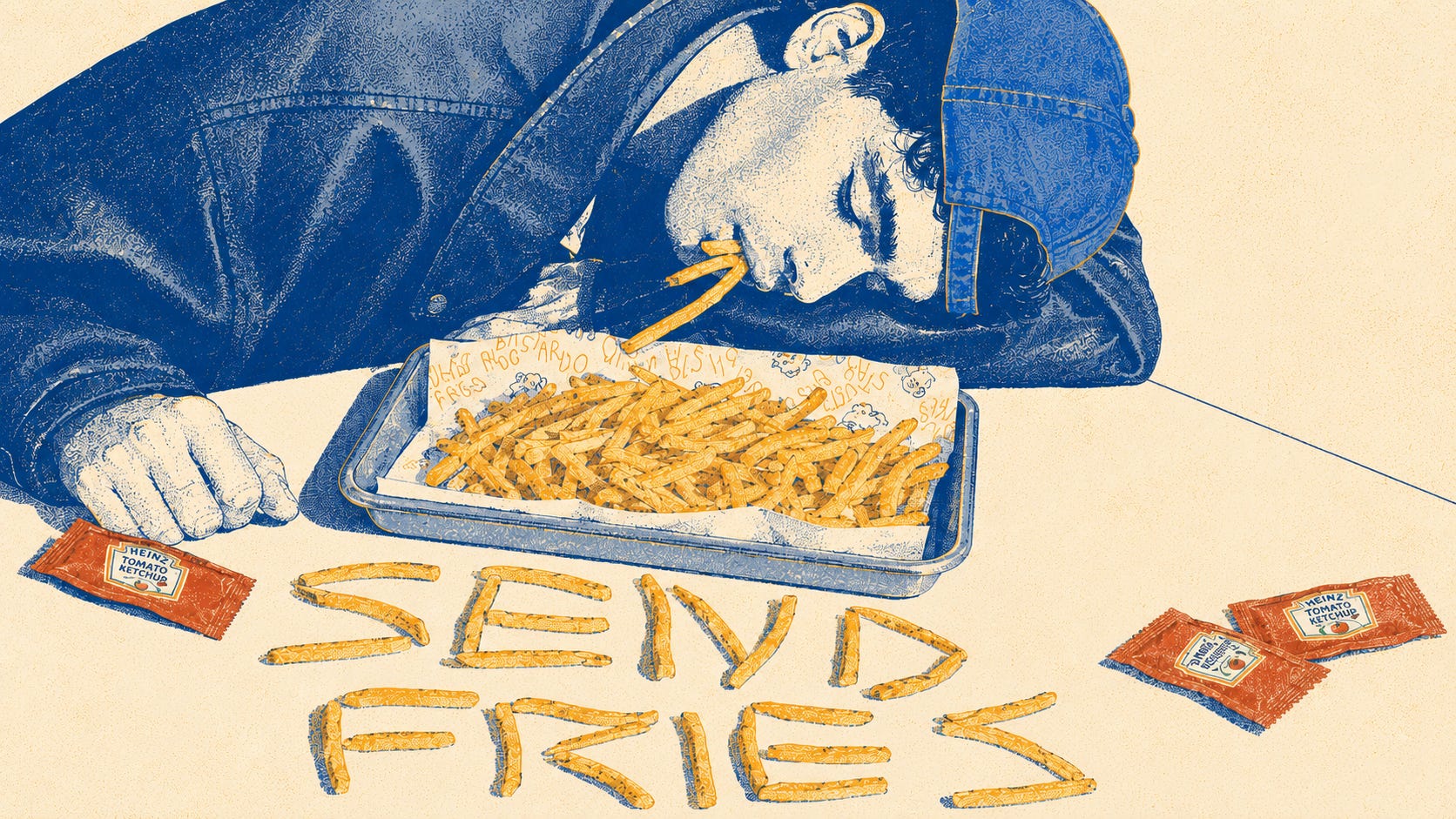
I started thinking about the first fry you steal from the bag before you pull out of the parking lot. The person who swears they’re not hungry, then eats half of yours. The bag inspection before you leave the drive-thru, because you’ve been burned before. The pickle pulled off one burger and handed to the one person who actually likes pickles.
Nobody puts this in a focus group answer. You’ve done some version of it hundreds of times and never once put a sentence to it. That’s exactly why it’s interesting.
A customer can tell you what they think about a restaurant brand. They’re much worse at telling you about the three fries they ate between the window and the first red light.
I think there’s an enormous amount of value hiding in that gap. Stick with me. I’ll show you how to use AI to go find it.
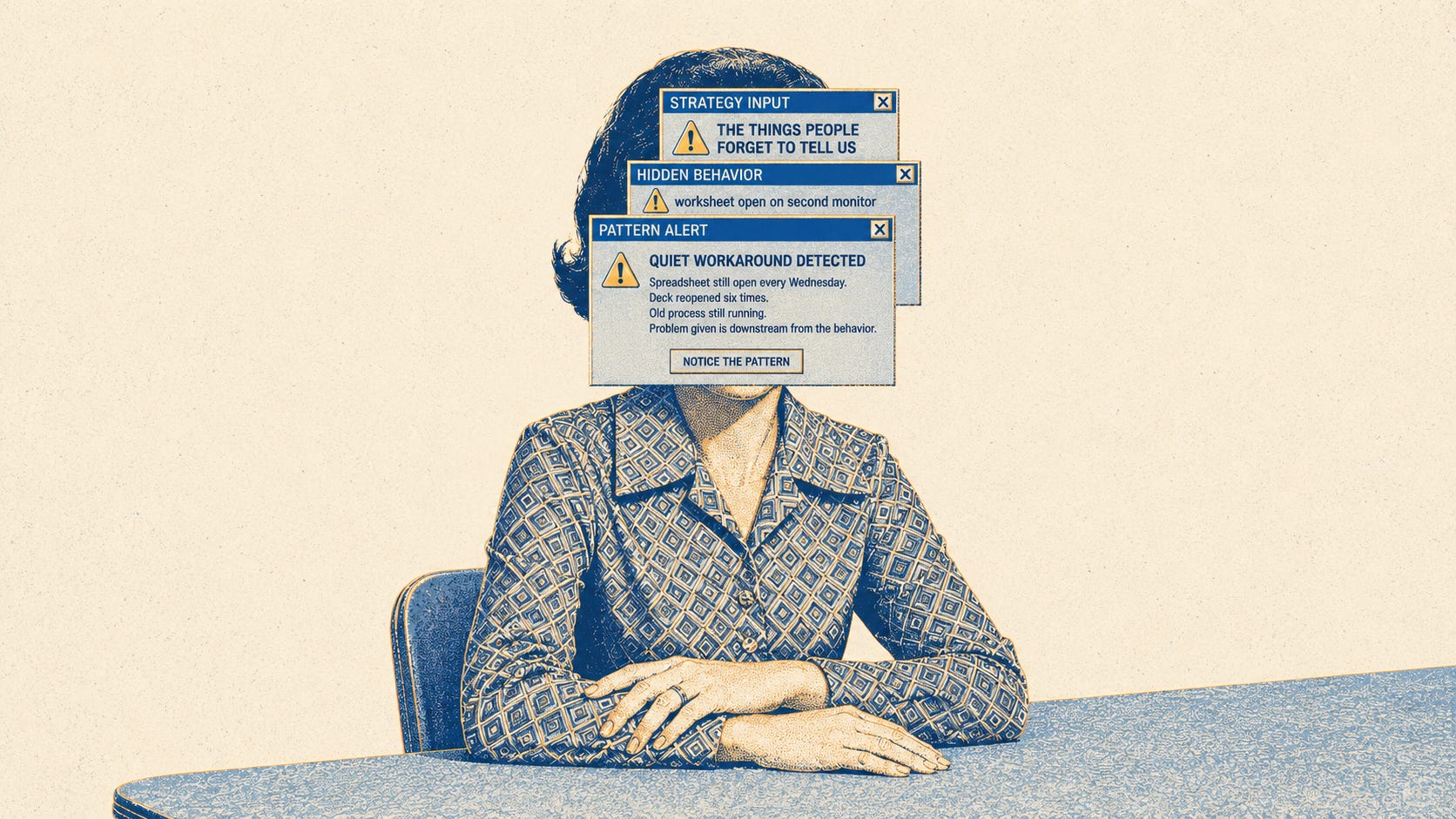
The things people forget to tell us
Most strategies start with whatever people can articulate.
We ask customers what they want, employees what frustrates them, executives what keeps them awake, then we organize those answers until they start looking like insight.
There’s nothing wrong with that. I’ve spent twenty years doing versions of it.
But underneath the world people can explain is another one made out of habits, workarounds, weird little rituals and things that became normal so long ago nobody remembers choosing them.
It’s the spreadsheet that eats every Thursday afternoon. It’s the CMO who opens the same deck six times because something still feels wrong, even though they can’t tell the creative team why. It’s the employee who tells leadership that the new process is “working pretty well” while keeping the old spreadsheet open on their second monitor.
It’s also the executive who has been put in charge of AI transformation and then privately asks somebody half their age which AI tool they should be using. Or the founder who tells you they need a website when the real problem is that the company changed and they no longer know how to explain what it is.
These moments don’t look strategic when you first encounter them. Most of them look like noise. Until you notice the pattern.
The problem people give you is often downstream from the behavior they stopped noticing.
That idea has been following me around.
A six-week problem disguised as “just a report”
I was in Seattle recently working with a 3-billion-dollar events company on AI fluency. One of the people we worked with was a procurement analyst who had a report he built every week.
There was nothing particularly dramatic about it.
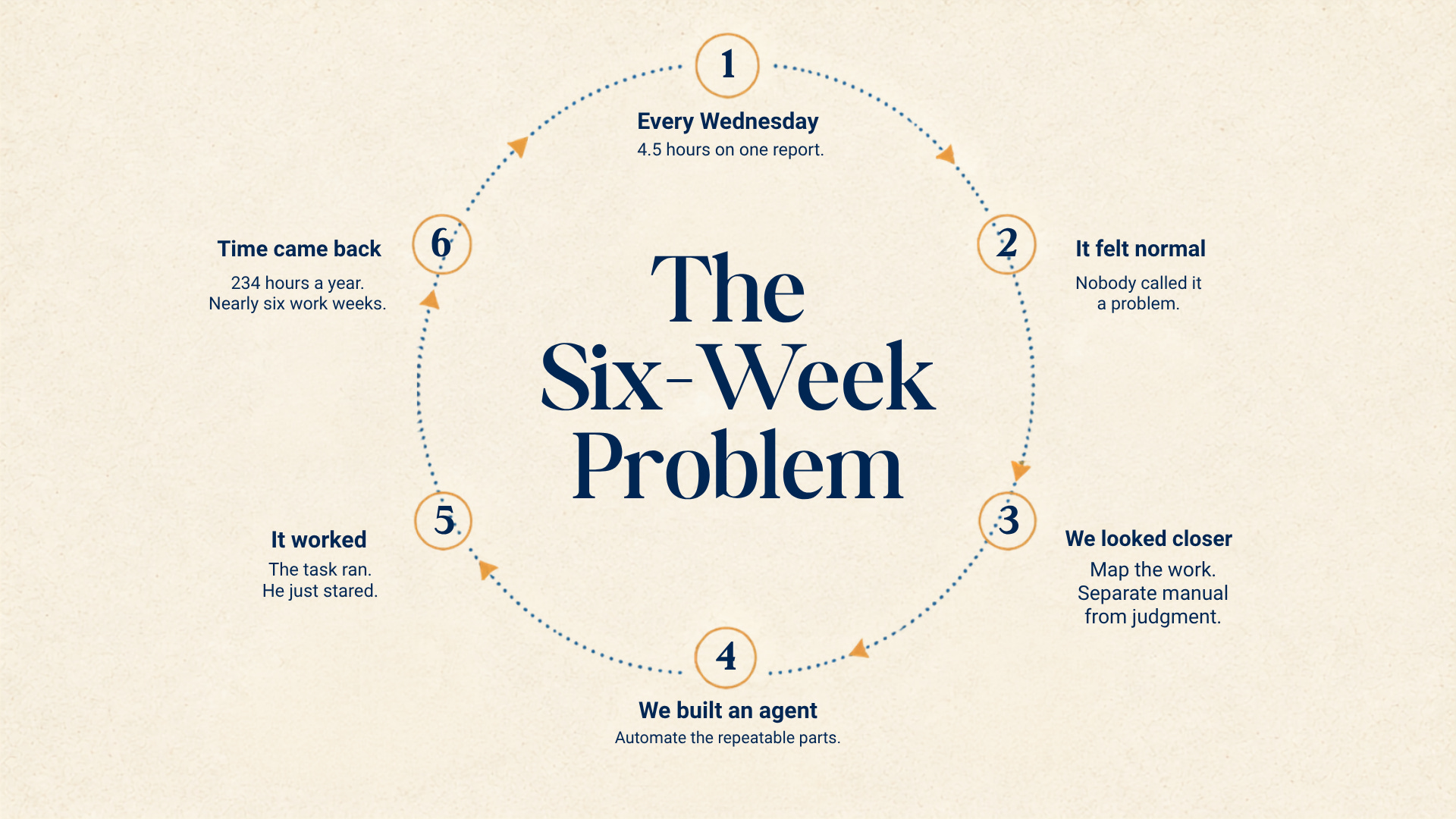
He collected information, moved it around, reformatted parts of it, checked things, assembled the output and sent it along. It took about four and a half hours every week.
He had been doing some version of it for years, which is what makes the story interesting. Nobody was storming into the executive meeting demanding action on the four-and-a-half-hour report crisis. There was no transformation initiative named after it. Nobody had even framed it as a problem.
It was just part of his job.
Four and a half hours every week works out to roughly 234 hours a year. Nearly six work weeks evaporated into a task everyone had accepted as “just a report”.
We sat with him and went through what he actually did. Where the data came from. Which steps were mechanical. Which parts required judgment. Where he checked himself. What happened when something was wrong.
Then together we built an agent around the work.
When he ran it and saw that it worked, he just stared at the screen for a second.
That stare stuck with me.
Of course there was an automation story there, but the AI wasn’t the part I cared about most. The interesting thing was watching someone discover that a piece of his life he had accepted as permanent wasn’t permanent at all.
We love giant transformation metrics because they look good on slides. Sometimes transformation is a guy realizing Wednesday afternoon belongs to him again.
You can’t see that KPI from 30,000 feet. You have to get close enough to notice it.
The company that exists when nobody is looking
I saw a different version of this while working through AI adoption with another organization.
We were trying to understand how people inside the company were actually using AI. Not what leadership believed was happening. Not what the policy allowed. What people were really doing when they had work to finish.
At first, assessments had names attached to them and the picture looked fairly clean. Once people could answer more freely, a messier company appeared.
People were experimenting outside approved tools. Shadow IT surfaced. Confusion showed up. So did fear. There were things people had been doing for weeks that barely existed in the official version of the organization.
That taught me something I keep coming back to.
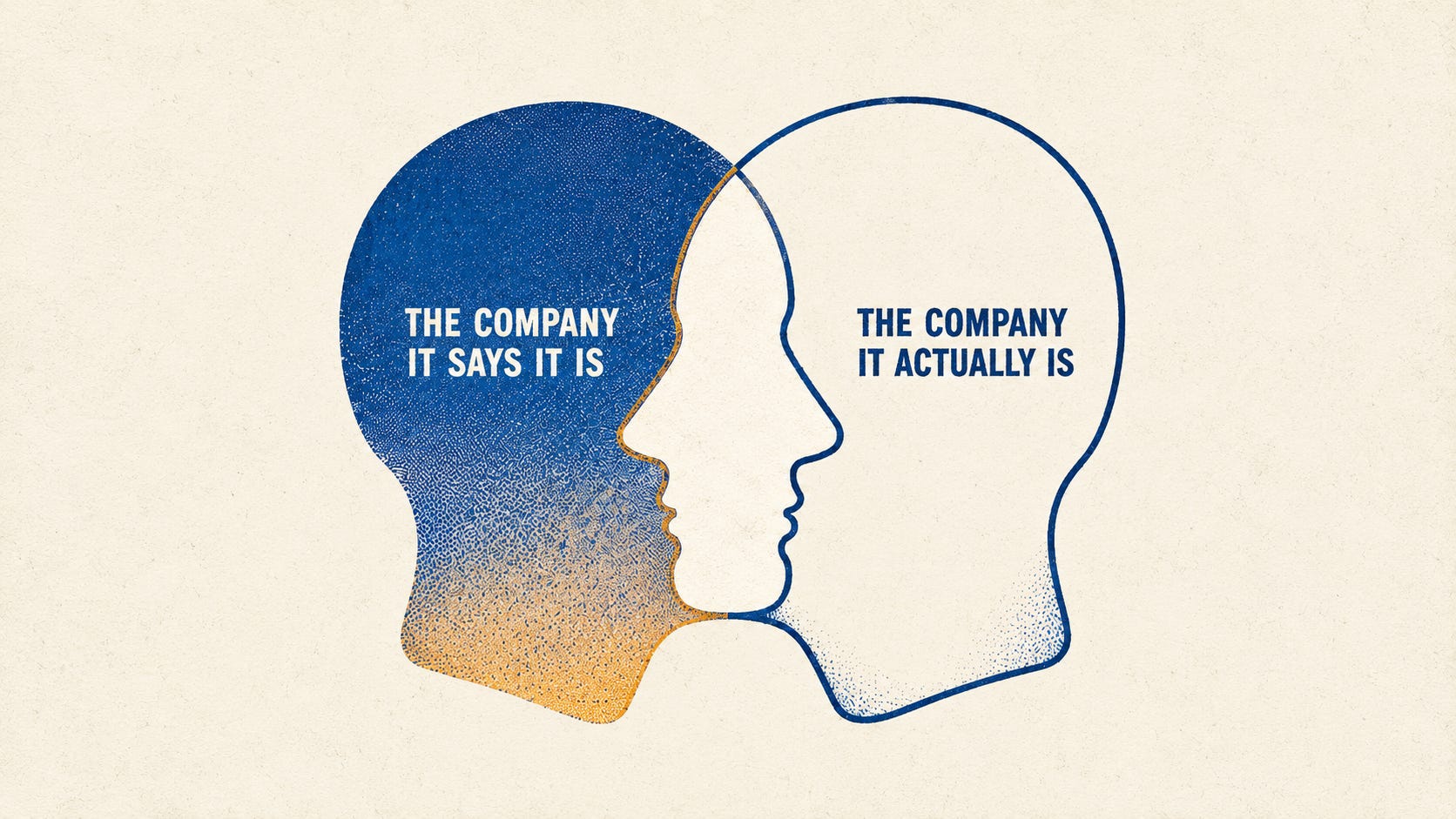
Every company has at least two versions of itself.
There is the company described in the town hall, the operating plan and the leadership meeting. Then there is the company that exists at 11:23 p.m. when somebody has a deadline, the official process sucks and no one is watching.
The second company is usually much more useful to study.
That’s where you discover what people value enough to work around. You see which rules survive contact with reality and which ones become theater. You find the person everyone secretly depends on, the spreadsheet nobody is supposed to need and the unofficial tool that somehow works better than the expensive one everyone was told to use.
We tend to treat these things as exceptions to clean up.
Sometimes they’re messages.
A workaround is a tiny product brief written in behavior.
Sometimes the answer is hiding six years behind the question
A few days ago I was talking with the executive chairman of a company that has been around for generations. We were talking about AI and he asked me some version of the question everybody is asking right now.
What would you do if you were me?
I could feel my brain loading the usual ammunition.
Frameworks. Roadmaps. Operating models. Transformation plans.
I’ve got plenty of them.
Instead, I asked him what they did during COVID.
He looked at me sideways because we had been talking about AI and I had suddenly transported the conversation back to 2020.
But that was the point. There wasn’t a playbook for COVID either, especially for a company whose business lives heavily in physical events. They had already lived through a moment when the map disappeared.
He smiled and told me COVID almost killed them, then in another sense saved them. We spent the next stretch of the conversation talking about how the company had behaved when there was no obvious answer.
The thing he needed wasn’t sitting inside an AI framework. It was hiding inside his own scar tissue.
That changed the entire conversation for me. We’re often so busy importing expertise that we overlook the evidence sitting inside someone’s history. The capability looks invisible because nobody thought to label it.
The right question (and context) makes it visible again.
Maybe this is the work
I’ve been thinking about this in the context of my own work too.
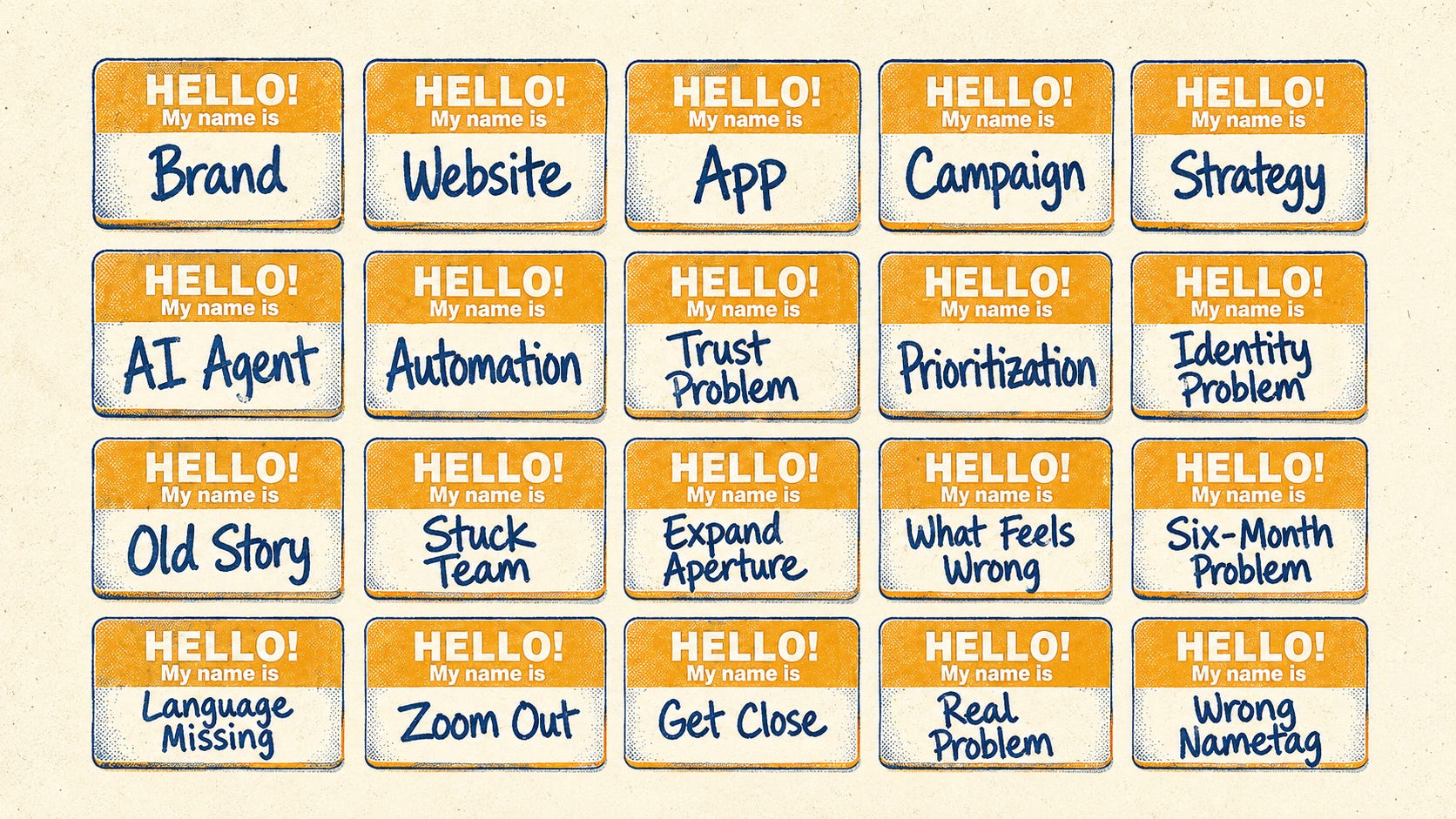
For years people have come to me asking for things. A brand. A website. An app. A campaign. A strategy. More recently, an agent, an automation or some other flavor of AI thing.
I can do those things. My companies do those things every day.
But the conversation I love starts somewhere else.
Bring me the problem that keeps bothering you. Tell me the thing you’ve been circling for six months. Show me where your team keeps getting stuck. Tell me what feels wrong even though you don’t have the language for it yet.
Then give me a little time to look around.
A client recently asked me to spend time with his CTO and gave me one instruction: expand his aperture.
An aperture controls how much light gets into the frame. Open it and you don’t necessarily create something new. You allow yourself to see more of what was already there.
That feels closer to the work I care about.
Sometimes you zoom out. Sometimes you get painfully close. You look at a business problem like a psychologist, a technology problem like an anthropologist, a creative problem like an engineer.
Then something moves.
The AI problem turns out to be a trust problem.
The productivity problem turns out to be a prioritization problem.
The request for a website is actually a CEO admitting, without saying it, that the old story no longer fits the business.
Problems rarely arrive wearing the right name tag.
That might be one of the most useful lessons I’ve learned.
Look at the five minutes around the thing
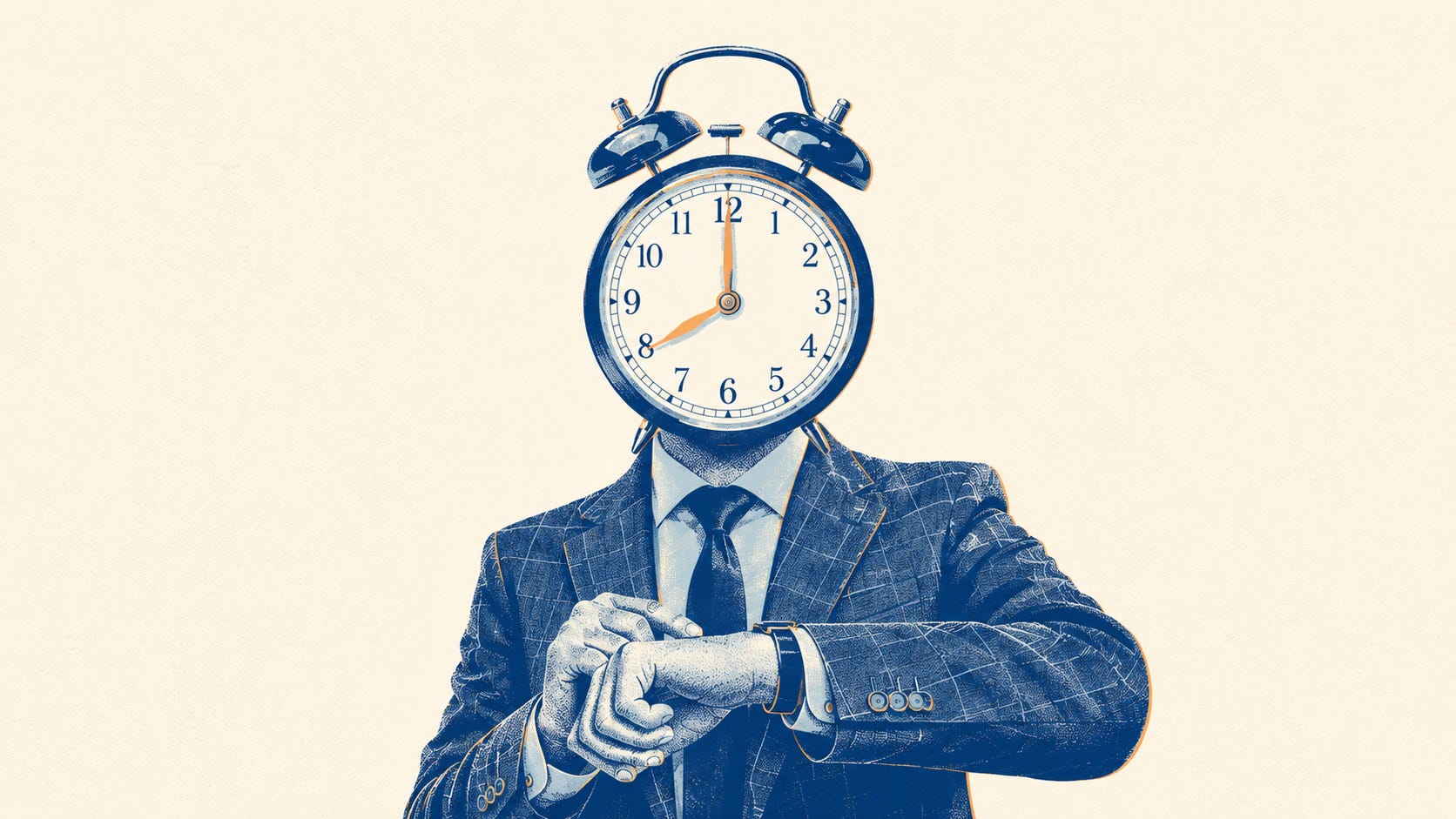
There’s a simple practice I’m using more often now.
When I’m trying to understand something, I stop staring directly at the main event and look at the edges around it.
What happens five minutes before?
An executive rewrites the first slide three times. Someone texts a colleague to make sure a number is right. A manager asks ChatGPT a question they didn’t want to ask their team. A customer checks their bank balance before hitting buy. A teenager turns down the music before pulling into the drive-thru so they don’t screw up the order.
That is all information.
Then look five minutes after.
Which slide gets screenshotted? What gets forwarded? Who stays behind after the meeting? Does the customer throw away the packaging or keep part of it? Does the employee use the new system tomorrow or immediately return to their spreadsheet?
We fetishize the main event because it’s easy to name. The purchase. The meeting. The presentation. The workflow. The campaign.
I’m becoming more interested in the wake it leaves behind.
That wake tells you what mattered.
The invisible moments scan
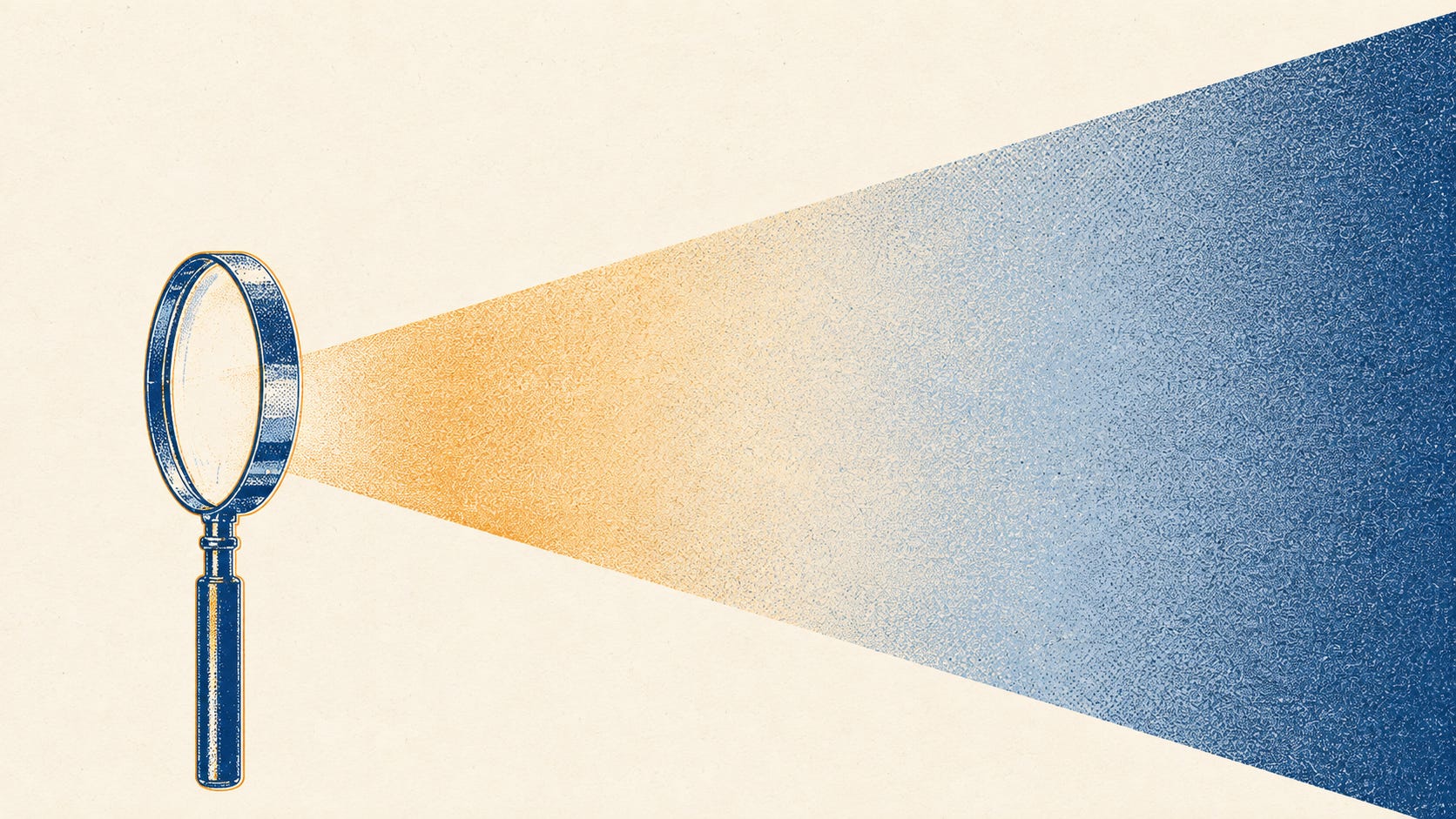
Once you start looking this way, there are a handful of places where the good stuff keeps showing up.
Watch the rituals. Pay attention to small things people repeat without discussing them. Repetition turns choices into furniture. Eventually nobody remembers the room without them.
Find the workaround. Whenever somebody has built their own spreadsheet, side channel, saved prompt, template, or tiny system, get curious before you clean it up. They may have solved a problem the official process refuses to acknowledge.
Look for contradictions. A company says creativity matters, then fills every available hour with meetings. A leader talks about empowerment, then rewrites every decision. An organization calls itself AI-first while people are embarrassed to admit they don’t know how to prompt. The gap between what we say and what we repeatedly do is usually where the interesting stuff is.
Follow the residue. Screenshots, receipts, abandoned drafts, open tabs, version names, Slack messages, crumbs in the car. Behavior leaves artifacts. The artifacts often tell a cleaner story than memory does.
Pay attention to embarrassment. The whispered question can be more valuable than the question asked in front of the room. People hide the places where identity and competence feel threatened. Those places are loaded with unmet needs.
Find the tiny tax. Ten minutes doesn’t sound like a business problem. Ten minutes every week across 400 people for three years absolutely is. The most expensive processes in an organization don’t always hurt enough in a single moment to trigger change.
And look for the uncelebrated win. Going home on time. Feeling prepared walking into the room. Not needing to ask for help. Knowing you won’t look stupid. Getting four hours of your week back.
Companies measure outputs. People experience their lives in moments.
And both matter.
AI makes recorded knowledge cheap. Observation gets more expensive.
There is a reason I think this matters even more now.
AI is astonishingly good at working with what has been captured. Give it the research, the transcripts, the reports, the internet, the documents and the customer feedback, then it can compress, compare and remix that material faster than any human team I’ve ever managed.
But there is a catch.
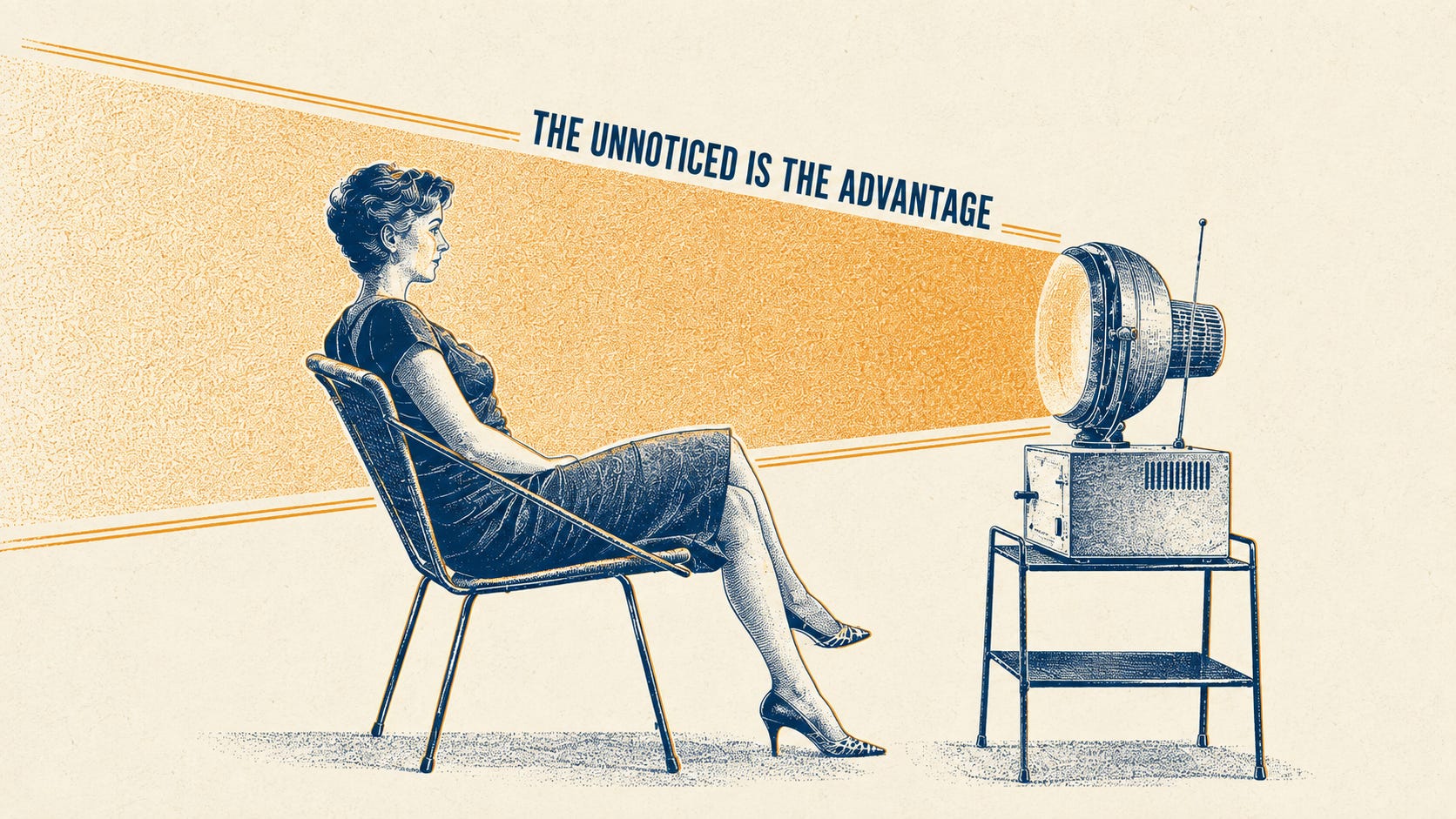
AI can synthesize what has been recorded. Its blind spot is often the thing nobody thought to record
The best prompt in the world can’t retrieve a behavior nobody noticed.
A model can tell you a thousand things about fast food culture. It can even invent a perfectly plausible story about fry stealing.
What it cannot tell you, without evidence, is whether your customers actually do it often enough for you to build strategy around it.
Someone still has to notice.
It can summarize an employee survey. It can’t make an employee feel safe enough to tell you what they were embarrassed to write down.
It can generate twenty AI transformation frameworks for an executive.
It won’t know that this executive’s most useful AI lesson might be sitting in how his own company survived COVID unless someone brings that history into the room.
This is where human judgment starts getting more valuable, not less.
The machine gives us enormous pattern recognition across the things the world bothered to document. Our job is still to notice the thing sitting three feet away that everybody decided was too ordinary to matter.
That’s where I want to spend more of my time.
Go three inches to the left
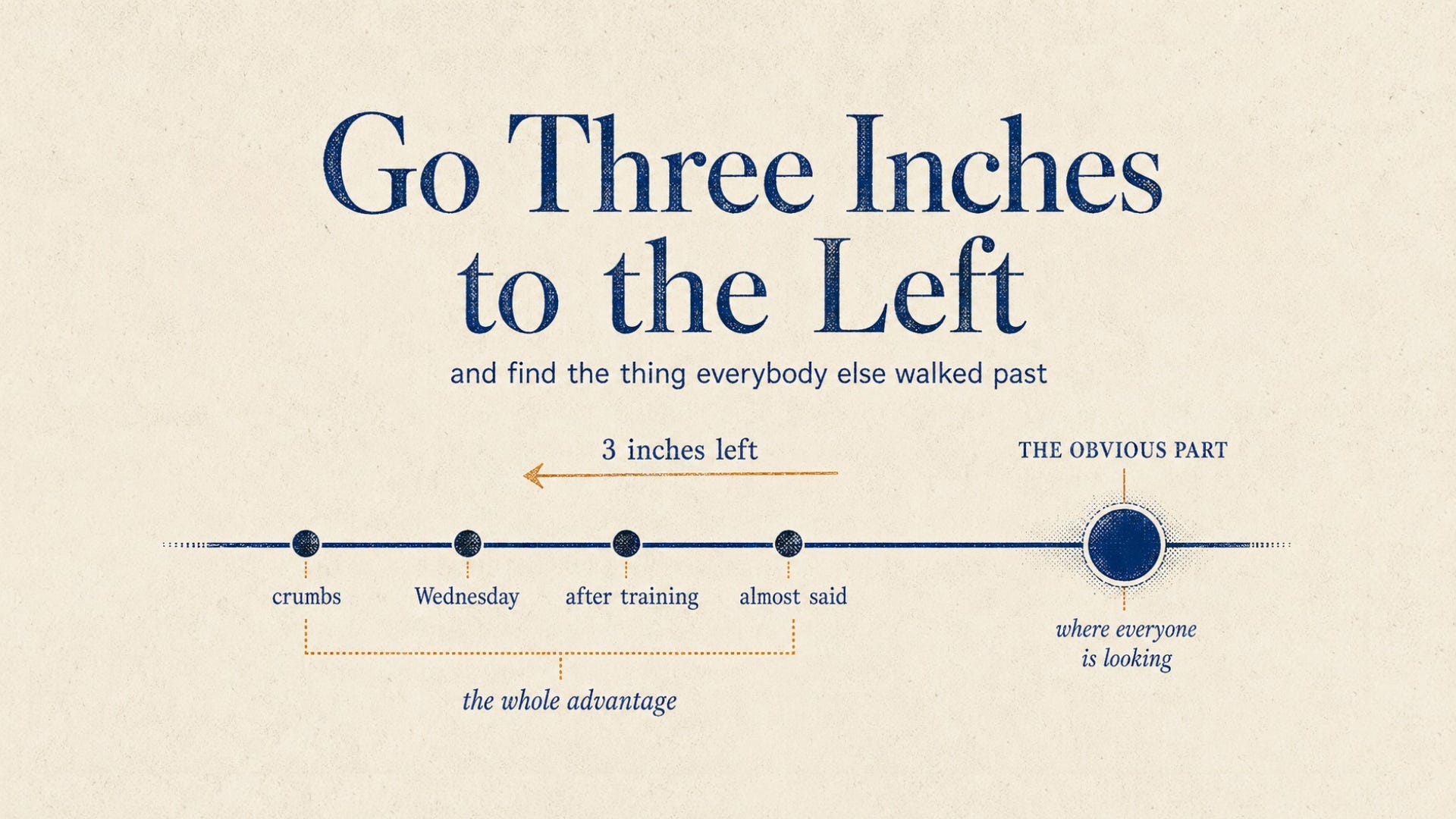
The thing I read this week keeps rattling around in my head because it gave me language for something I think I’ve been doing instinctively for years.
Look for the undocumented. The unfinished. The uncelebrated. The unphotographed. The unphotogenic.
Look at the crumbs instead of the campaign. Look at Wednesday instead of the annual productivity report. Look at what the employee does after the training, not what they say on the survey. Look at the sentence somebody almost says and then swallows.
The obvious part of the problem is crowded. Everyone is staring at it.
Next time somebody hands you a brief, a strategy problem, a customer journey, a broken workflow or a giant hairy question, try looking three inches to the left.
You may find the thing everybody else walked past.
And that may be the whole advantage.
Steal this: The Invisible Moments Scan
I turned the idea into a prompt (and a skill/agent) so you can try it on something you’re working on right now.
I want you to run an Invisible Moments Scan on this:

[PASTE A BRAND, PRODUCT, AUDIENCE, BUSINESS PROBLEM, WORKFLOW, TRANSCRIPT, RESEARCH SET, OR SITUATION]

Do not solve the stated problem yet.

First tell me the official version of the situation. What would normally appear in the brief, dashboard, process map, customer journey, research report, or executive deck?

Then look around it for the behavior people are unlikely to mention because it feels too ordinary, unconscious, private, messy, embarrassing, unfinished, repetitive, or insignificant.

Specifically inspect:

1. The 5 to 10 minutes before the obvious event.
What are people checking, hiding, preparing, rehearsing, searching, arranging, delaying, or improvising?

2. The 5 to 10 minutes after.
What gets screenshotted, forwarded, cleaned up, saved, discarded, questioned, redone, celebrated, hidden, or abandoned?

3. Unconscious rituals.
What tiny behaviors happen repeatedly without anyone deciding to do them?

4. Workarounds.
Where have people invented spreadsheets, side channels, personal tools, templates, saved prompts, manual steps, or unofficial systems because the official system is not good enough?

5. Contradictions.
Where does stated belief differ from repeated behavior? Compare values with calendars, policy with practice, strategy with spending, and stated preference with actual choice.

6. Private behavior.
What changes when nobody is watching? Look for embarrassment, fear, guilty pleasures, quiet confusion, hidden tools, whispered questions, shortcuts, and behavior that would never appear in an advertisement or case study.

7. Residue.
What evidence does the behavior leave behind? Look for browser tabs, receipts, screenshots, drafts, sticky notes, wrapper crumbs, calendar patterns, version names, Slack messages, duplicate spreadsheets, saved prompts, and open loops.

8. Micro-costs.
What tiny repeated tax has become so normal that nobody calls it a problem anymore? When the evidence supports it, translate that tax into weekly and annual time or money.

9. Uncelebrated wins.
What small change would matter deeply to the person but never appear in the normal KPI dashboard? Think leaving on time, feeling prepared, avoiding embarrassment, getting an afternoon back, trusting the answer, or not needing to ask for help.

Give me 15 Invisible Moments.

For each one, include:

MOMENT:
Describe a specific scene I can picture happening.

VISIBLE BEHAVIOR:
What could actually be observed or verified?

HIDDEN TENSION:
What desire, fear, identity, tradeoff, frustration, or emotion might sit underneath it?

WHY IT MATTERS:
What could this tiny moment reveal about the larger problem?

OPPORTUNITY:
What could a brand, product, leader, creator, or organization notice, remove, amplify, redesign, reward, name, or build around?

EVIDENCE STATUS:
Label it Observed, Supported, Hypothesis, or Needs Evidence.

Do not fabricate customer truths.

When evidence is missing, call the idea a hypothesis and tell me exactly what I would need to observe to prove or kill it.

Then score every moment from 1 to 10 for:
- Surprise
- Emotional truth
- Strategic value
- Specificity
- Ownability

Choose the five strongest.

Finish with four things:

THE INVISIBLE TRUTH
One sentence explaining what everybody else studying this problem is likely to miss.

THE OPPORTUNITY
The most useful strategic or creative move created by seeing it.

THE STORY
A one-sentence hook that could become an article, campaign, product pitch, presentation opening, or social post.

WHAT TO WATCH NEXT
Three real-world behaviors or artifacts I should observe next to test whether this insight is actually true.

Prefer mundane specificity over clever language.

I don’t want trends.

I want the thing everybody has seen and nobody thought mattered.
If you want to turn this into a skill easily you can ask claude to “create a skill from this” or you can use our free skill creator MakeMySkill.