

I’m sitting in a creative review staring at a mood board. For normal people wondering wtf a mood board is, it’s client-speak for putting pictures together to evoke a mood.
This isn’t one specific client. I’ve been in some version of this room for twenty years. There’s a giant screen, too many people around a table, and thirty beautifully arranged images trying to explain what something that doesn’t exist yet should feel like.
There’s an A24 still. Some Dieter Rams. Japanese packaging. A brutalist building. A Nike campaign. A hotel in Copenhagen that apparently every brand on earth would like to become.
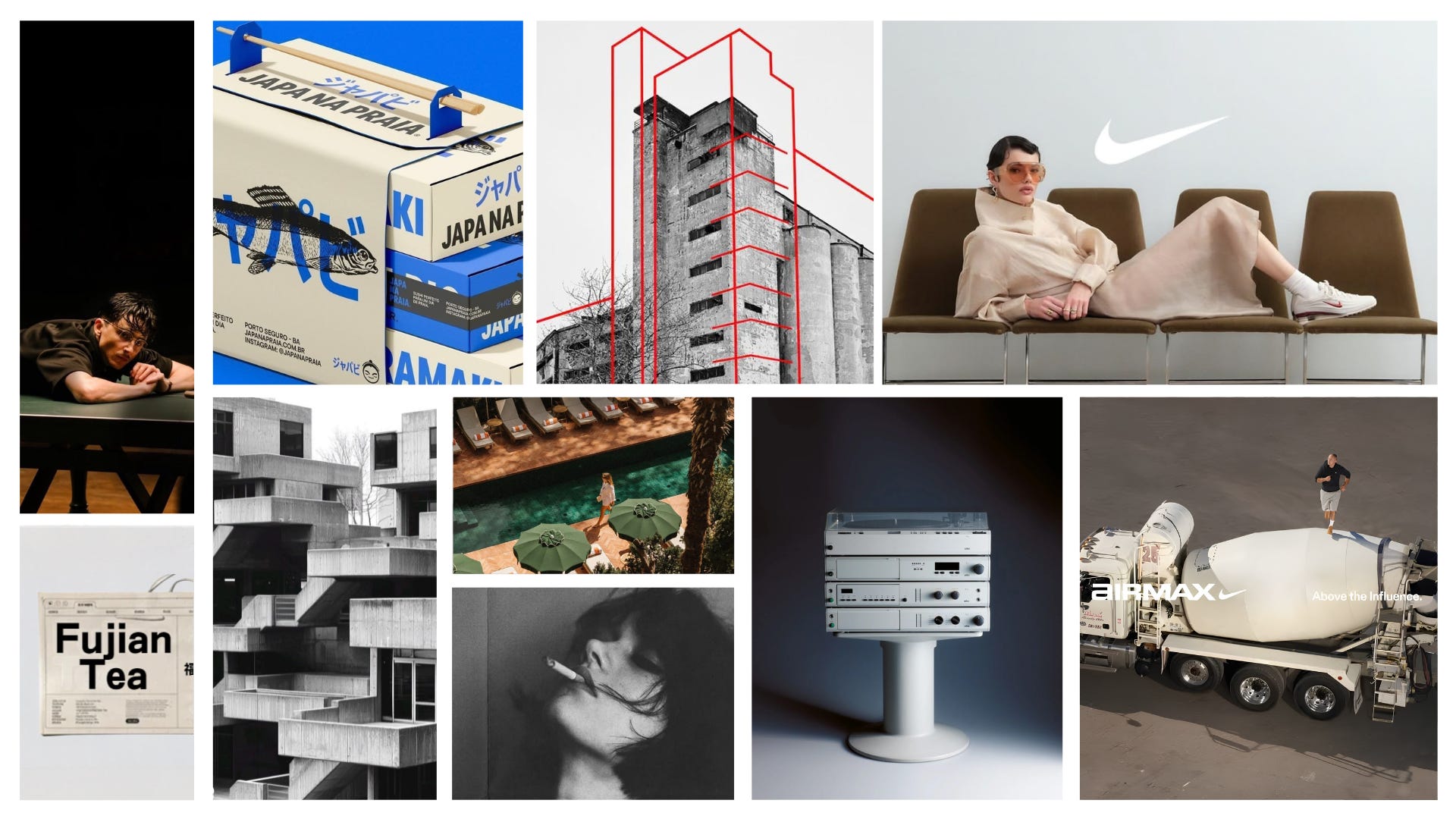
Somewhere in the corner is a grainy photograph of a woman smoking because creative people have collectively decided cigarettes mean taste if you lower the saturation enough.
And the board is good.
That’s what is making my blood boil.
There’s nothing wrong with any individual reference. I like most of them. In a former life I’ve probably used half of them myself.
But I’m looking at the whole thing thinking:
I swear to God I’ve seen this exact board before.
Maybe not these exact images.
Definitely the same pull. Same references and search phrases. The same handful of places the design Twitter and Pinterest-surfing soccer moms have collectively decided are “interesting”.
And now we’ve given everybody on Earth a machine that can inhale this entire library in seconds.
Which raises a new question I can’t stop thinking about.
What happens when access to inspiration drifts into the sea of sameness?
Hate to break it to you, but the common internet stopped being your moat the second LLMs slurped up the world’s knowledge like soup on a Sunday.
For most of my career, a giant part of being great at creative work was knowing where to look.
You collected things. (This is where I officially turned into a digital hoarder)
#IYKYK
Books. Magazines. Weird websites. Packaging from a trip to someplace nobody ever heard of. A photograph you took walking around New York. An obscure designer somebody showed you ten years ago.
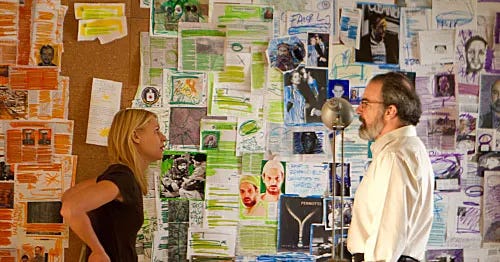
Your references became part of your taste. Or in my case, what I call a murderwall. (DM me and I’ll share more)
That library mattered because not everybody had access to them at the click of a button.
Now?
Ask an AI model for 100 examples of incredible hospitality brands.
Ask it to analyze the visual language of A24.
Ask it for Japanese packaging references, brutalist identity systems, Cannes winners, emerging fashion aesthetics, challenger brands, whatever.
You’ll have more material than I could have collected in a month twenty years ago.
That’s amazing but opens a whole new can of worms.
When everybody has access to the same giant library (or models), access stops being the advantage.
The advantage is on what you pay attention to not what you can summon in a single prompt.
But enough about me I’ve got a question for you.
When was the last time you actually watched a customer?
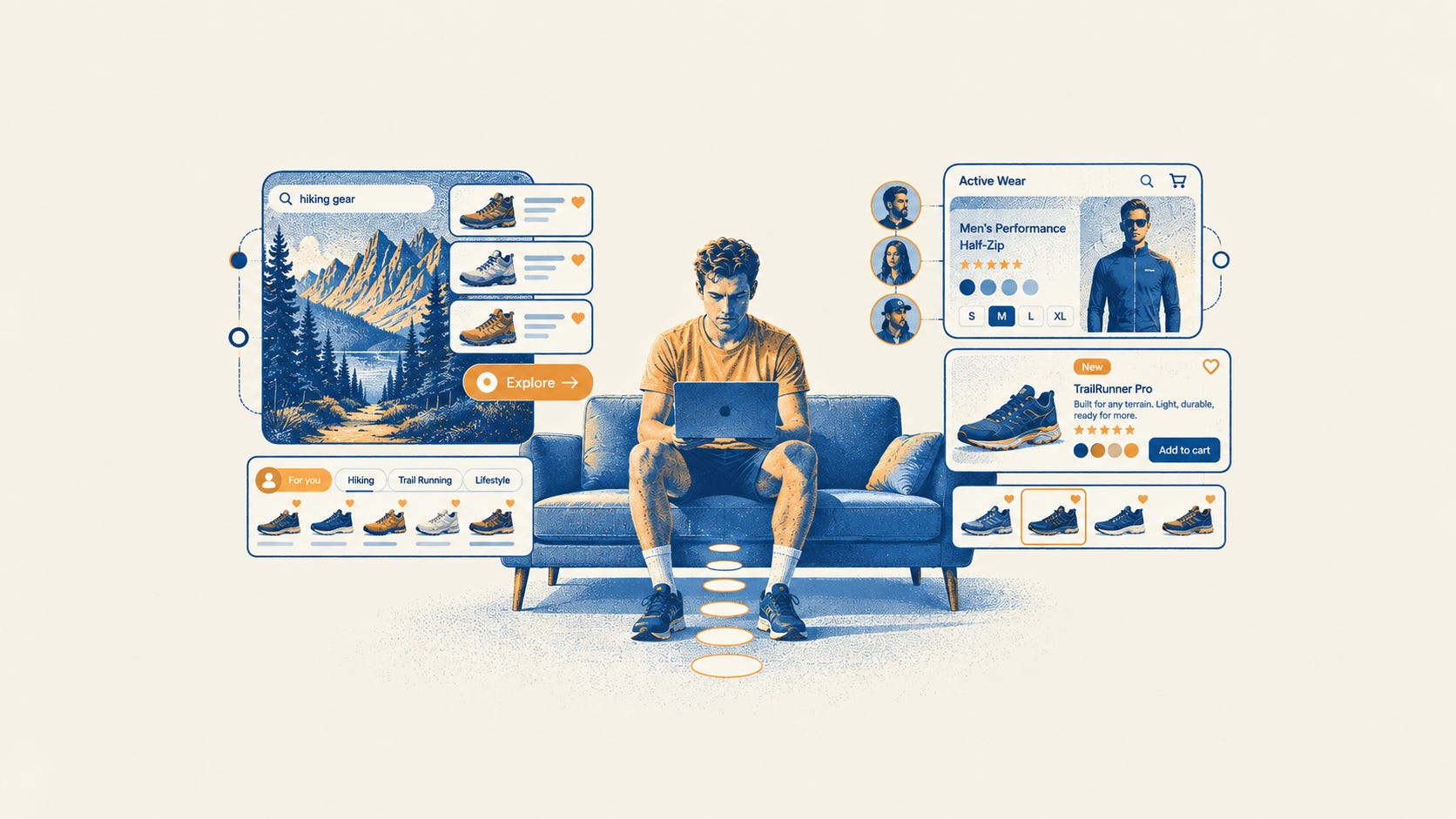
I don’t mean looked at your analytics. Or read a research deck.
And I definitely don’t mean asked Claude to summarize 4,000 customer reviews.
I mean actually watched somebody interact with the thing you sell.
When was the last time you watched someone open your packaging?
Or stood next to a new customer while they tried your product for the first time?
When did you last watch somebody hit a confusing step in your onboarding flow, hesitate for three seconds, hit back, scroll around, mutter something under their breath and finally figure it out?
When did you last sit in on a sales call without looking at your phone or catching up on emails and slack messages?
Walk through one of your stores?
Listen to somebody explain your product to their spouse?
Watch an employee invent a ridiculous workaround because the process you designed doesn’t actually work the way your PowerPoint says it does?
That stuff is messy. Which is exactly why I’m increasingly convinced it matters now more than ever.
The magic’s in the messy. Skip the LLM-washing so you don’t end up boring and without an actual opinion
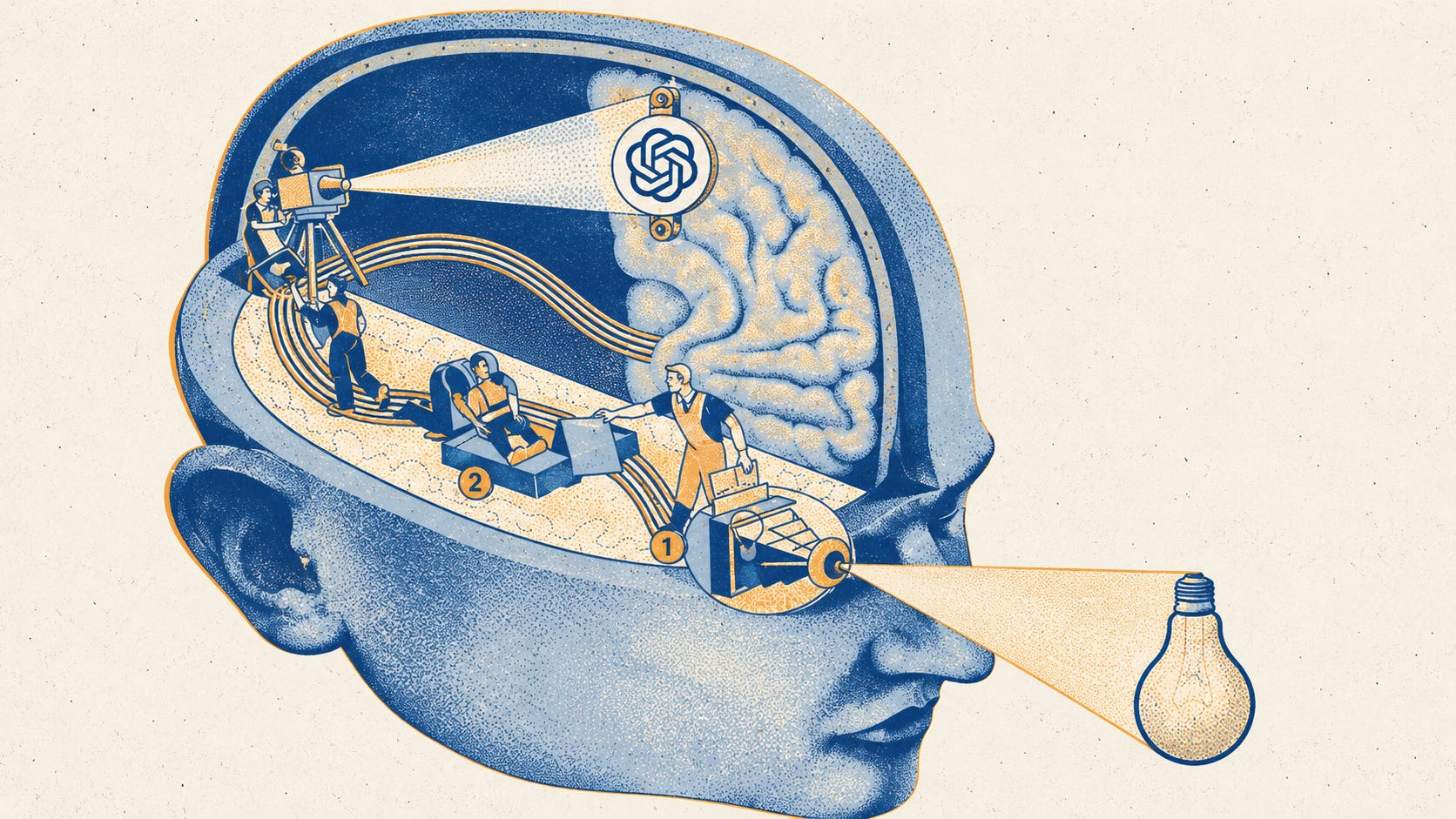
Companies are incredibly good at cleaning reality up.
We turn people into personas. Conversations into bullet points. Behavior into dashboards.
Customer complaints into themes. Then AI gets involved, and a thousand strange little human moments get LLM-washed into one clean, homogenized, boring slide that says:
Customers value convenience. (No shit. Sherlock 😡 )
We’ve successfully turned reality into soggy freaking oatmeal.
The mess gets removed because mess is difficult to present.
It doesn’t fit neatly into a strategy deck. It contradicts itself.
A customer says they care about privacy, then gives TikTok access to their entire camera roll.
People say they want fewer notifications, then check their phone 164 times a day.
Someone tells you your product is “easy to use” while keeping a handwritten cheat sheet taped to their monitor.
That contradiction is NOT noise. It’s where I want you to FOCUS.
Because the weird thing is the magic your robot that lives in a rectangle isn’t capable of seeing.
LLMs don’t understand our trauma, our contradictions, and the weird quirks that make us humans human. But you’re reading this, so I’m telling you if you use AI differently like I do you’ll get the benefit without the watered-down, soggy oatmeal answers that everyone else does.
Buckle up and put on your weird lens
Here’s a lens I’ve been using more and more.
Weird.
(Want me to do it for your brand? Subscribe and drop me a DM.)
Whenever I’m studying a business, product, audience or cultural behavior, I ask:
What’s weird here?
Not weird because it’s funny.
Weird because it breaks the pattern.
What are people doing that our strategy doesn’t explain? What workaround have they invented? What are they saying that contradicts what they’re doing? What part of the product are they using in a way nobody designed for? What language keeps showing up that our marketing team would never write? What are people embarrassed to admit? What feels too small to put into the research report?
That last one matters.
Because everybody notices the obvious pattern.
How to escape the sea of sameness

The interesting stuff is sitting one inch away, but we give up before we get there.
That’s the signal your competitor may not have seen. It’s the product idea hiding inside somebody’s stupid workaround.
That’s the line of copy sitting inside an actual customer sentence, not the clever one the 24-year-old copywriter at your agency made up with ChatGPT today.
That’s the creative spark waiting inside something everybody else classified as noise.
A reference or AI summary is NOT the answer your business needs
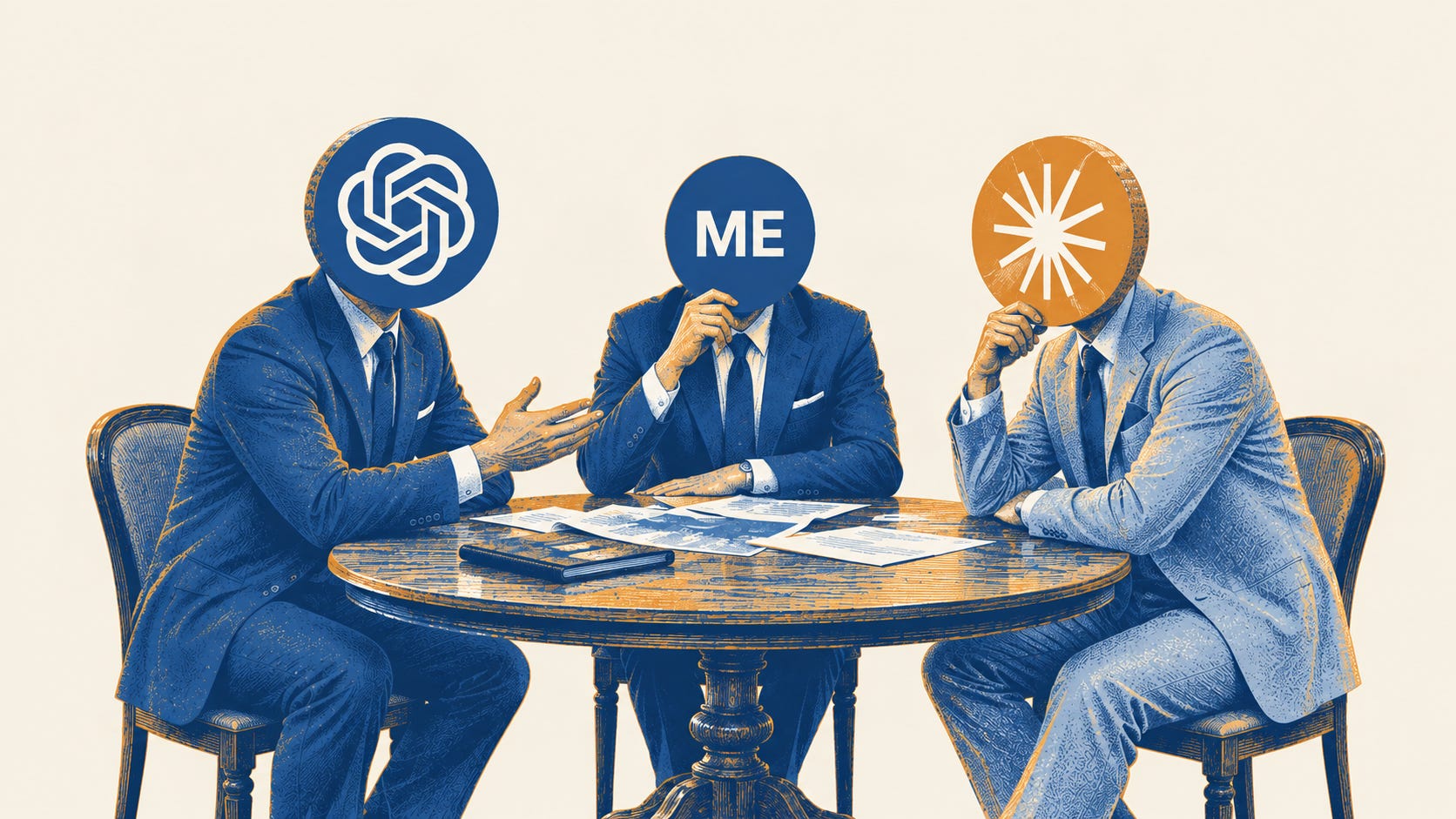
This is where mood boards pulled from the same well everyone else goes to turns into what I call blending into the sea of sameness.
A reference is useful. But a point of view and differentiation is what sets apart the mean from the meaningful.
But a reference is also the answer somebody else arrived at after studying their own problem.
You’re looking at the output.
You didn’t necessarily see the observation that created it.
So when we start with references, we tend to copy the answer rather than recreate the act of seeing that produced it.
This is true well beyond design.
You see a competitor launch a membership program, so you build a membership program.
They launch an AI assistant, so somebody asks where your AI assistant is.
A founder posts constantly on LinkedIn and grows their business, so your CEO suddenly needs a “thought leadership strategy.”
We copy artifacts but ignore their intention. And then we wonder why theirs works and ours don’t.
Try a Human Signal Hunt
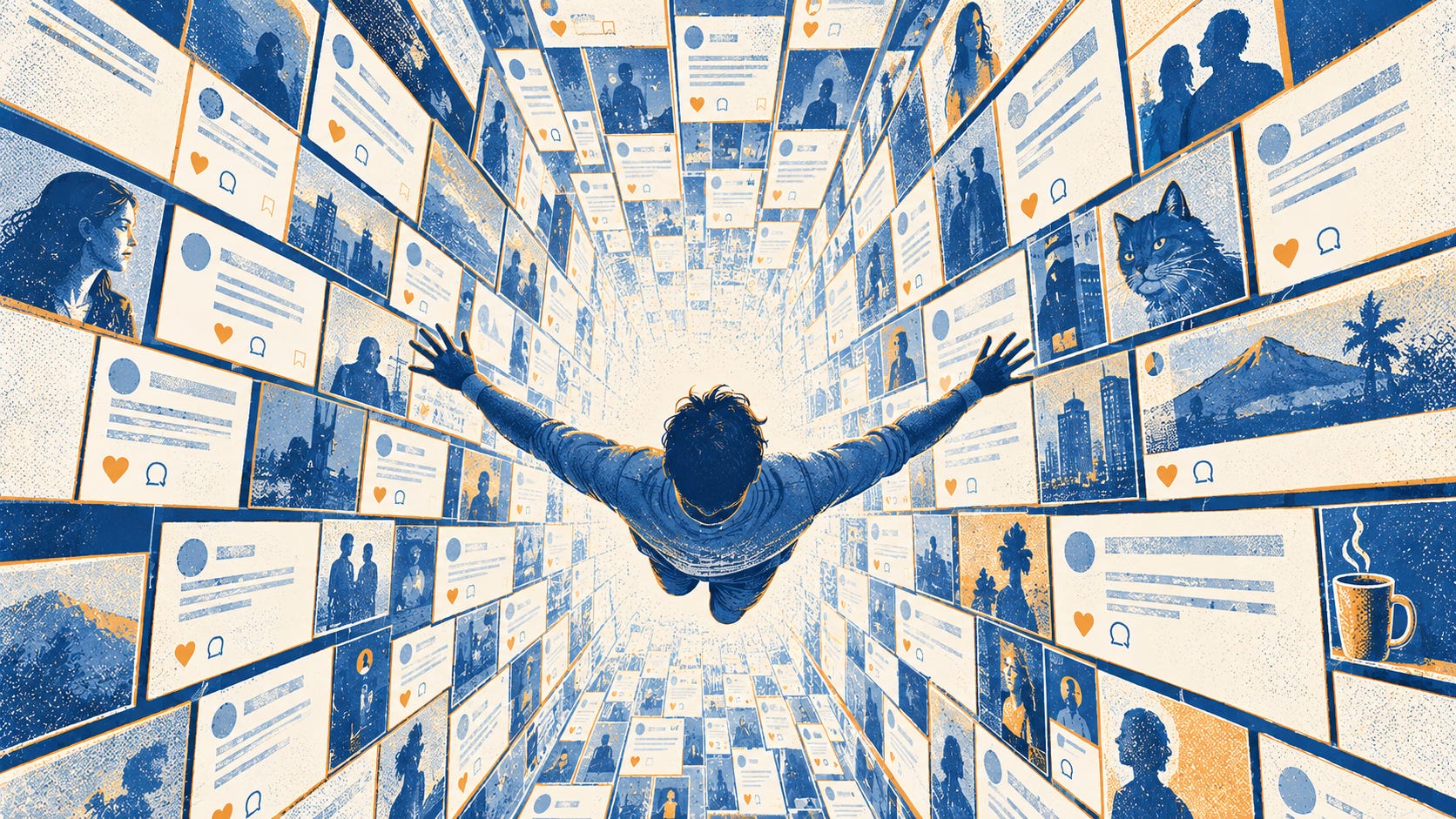
Here’s something you can do this week.
Forget brainstorming for an hour.
Go hunting.
Find ten unpolished observations from your business.
Not insights yet. Just things that actually happened.
A customer abandoned a cart after staring at shipping for twelve seconds.
Three prospects used the exact same strange phrase on sales calls.
Someone photographed your packaging before throwing it in the trash.
A power user built a spreadsheet to compensate for something your software doesn’t do but should.
People keep asking a question that your homepage supposedly answers.
A customer loves a feature your product team barely thinks about.
Write each one down exactly as you saw it.
Resist the urge to explain it.
Then ask one question: What’s weird about this?
Now you have something worth feeding into AI.
Look first. Prompt second. But if you must prompt, here’s one you can use to get some gold.
Note: For my clients, we distill this knowledge into skills, agents, and workflows that are repeatable, but as a subscriber, I want to give you something quick you can copy-paste to get value from the dozens of meetings you have recorded and sitting unused on your hard drive.
Copy paste the below prompt into your favorite AI:
# HUMAN SIGNAL HUNT

You are helping me conduct a Human Signal Hunt.

Your job is NOT to summarize my research.

Your job is NOT to turn people into personas, themes, bullet-point clichés, or generic business insights.

Your job is to help me notice the strange, specific, contradictory, emotionally loaded, inconvenient, revealing human moments hidden inside the material I give you.

The goal is to preserve the mess long enough for us to discover something other people might overlook.

## THE CORE RULE

OBSERVATION BEFORE INTERPRETATION.

Do not rush to explain what something means.

First show me exactly what happened.

Then help me ask better questions about it.

---

# NON-NEGOTIABLE RULES

## 1. PRESERVE EXACT HUMAN LANGUAGE

When a person says something interesting, quote them VERBATIM.

Do not:
- clean up their grammar
- improve their wording
- shorten the quote unless you clearly mark the omission
- rewrite it into business language
- turn it into a polished insight
- replace their words with your interpretation

Their weird phrasing may BE the signal.

Whenever possible, include enough of the surrounding sentence or exchange to preserve the original meaning.

## 2. DO NOT SUMMARIZE THE HUMANITY AWAY

Never convert:

“I literally keep a Post-it on my monitor because I can never remember where they buried that setting.”

into:

“Users experience navigation challenges.”

That destroys the interesting part.

Keep the Post-it.

Keep “literally.”

Keep “buried.”

Keep the fact that it sits on their monitor.

Those details matter.

## 3. SEPARATE FACT FROM INTERPRETATION

Every finding must distinguish:

OBSERVED:
What literally happened, was said, or was done.

POSSIBLE MEANING:
What might explain it.

Never present an interpretation as though we observed it directly.

## 4. HUNT FOR ANOMALIES, NOT AVERAGES

Pay special attention to things that feel:

- weird
- contradictory
- irrational
- emotional
- embarrassing
- improvised
- inefficient
- unexpectedly delightful
- oddly specific
- inconsistent with what people claim
- inconsistent with our strategy
- too small for a normal research report
- dismissed as an edge case
- repeated in unusual language
- evidence of a workaround

The average is easy to see.

I want the thing sitting one inch outside the pattern.

## 5. DO NOT FORCE A PATTERN

One fascinating observation can qualify.

Do not pretend three people said something when only one person did.

Do not inflate weak evidence.

Label frequency precisely:

SEEN ONCE
SEEN TWICE
REPEATED PATTERN

A single observation may still be incredibly valuable.

## 6. NO GENERIC CONSULTANT LANGUAGE

Never give me phrases like:

“Customers value convenience.”
“Users want seamless experiences.”
“Consumers seek authenticity.”
“Customers experience friction.”
“Users desire personalization.”

Those are soggy oatmeal.

Show me what the person actually did or said.

## 7. DO NOT SOLVE TOO EARLY

During the first pass, do NOT recommend:

- features
- campaigns
- products
- messaging
- strategy
- positioning
- content ideas
- business models

We are hunting before brainstorming.

Stay curious longer.

---

# STEP ONE: EXTRACT RAW HUMAN SIGNALS

Read all of the source material carefully.

Find 10 to 20 moments worth stopping on.

For each one, return:

### SIGNAL [NUMBER]

**What happened**
Describe the observable moment in one or two sentences.

Stay extremely close to the evidence.

**Exact verbatim**
> “[Exact words from the source]”

If there is no spoken or written quote, say:
NO VERBATIM AVAILABLE

Do not invent one.

**Source**
Identify where this came from as precisely as the material allows.

Example:
Customer interview 04
Sales call with Acme
Support ticket #1832
App Store review
Usability session, 14:32

**What makes this weird**
Explain what breaks the expected pattern.

Do not turn this into a conclusion yet.

**Type of signal**
Choose one or more:

CONTRADICTION
WORKAROUND
UNEXPECTED BEHAVIOR
UNEXPECTED LANGUAGE
FRUSTRATION
DELIGHT
RITUAL
TABOO
HACK
MISUSE
UNMET NEED
STATUS SIGNAL
FEAR
DESIRE
SOCIAL BEHAVIOR
EDGE CASE
OTHER

**Evidence strength**
SEEN ONCE
SEEN TWICE
REPEATED PATTERN

Do not exaggerate frequency.

**Question this raises**
Give me 2 to 3 questions that would help us understand the behavior more deeply.

Prefer questions like:

Why would a reasonable person do this?

What would have to be true for this behavior to make perfect sense?

What are they solving for that we may not understand?

What does their behavior reveal that their words do not?

Why did they invent this workaround instead of using the intended process?

What might we be incorrectly labeling as irrational?

---

# STEP TWO: FIND THE CONTRADICTIONS

After extracting the raw signals, look across them specifically for contradictions.

I care about gaps between:

WHAT PEOPLE SAY vs. WHAT THEY DO

WHAT THE COMPANY INTENDS vs. WHAT CUSTOMERS ACTUALLY DO

WHAT THE PRODUCT WAS BUILT FOR vs. HOW PEOPLE ACTUALLY USE IT

WHAT LOOKS INEFFICIENT vs. WHAT MAY SERVE AN IMPORTANT HUMAN PURPOSE

WHAT THE DASHBOARD SAYS vs. WHAT THE HUMAN MOMENT SUGGESTS

For every contradiction you find, show the evidence on both sides.

Do not resolve the contradiction.

Make it more interesting.

---

# STEP THREE: FIND THE LANGUAGE WE WOULD NEVER INVENT

Pull out the 10 most distinctive phrases, metaphors, complaints, descriptions, nicknames, or strange word choices used by actual people.

Quote each one exactly.

For each phrase, tell me briefly:

Why is this language interesting?

What does it reveal about how this person sees the problem?

Do NOT rewrite it into marketing copy.

I want their language, not ours.

---

# STEP FOUR: THE WEIRD LENS

Now review everything and answer:

What is weird here?

Give me the 5 observations you believe deserve the most curiosity.

For each one:

**The strange thing**
One sentence.

**The evidence**
Exact behavior and verbatim.

**Why most teams might ignore it**
One sentence.

**What we still do not understand**
One sentence.

**What I should observe next**
Suggest one concrete thing I could watch, ask, or investigate in the real world.

Do not give me a solution yet.

---

# STEP FIVE: ONLY NOW, INTERROGATE THE SIGNAL

Choose the three strongest human signals.

For each one, give me five plausible explanations for why this behavior might be happening.

At least two explanations should challenge the obvious interpretation.

Then answer:

What evidence would support each explanation?

What evidence would disprove it?

What would we need to observe next?

Do not choose a winner unless the evidence clearly supports one.

---

# STEP SIX: OPPORTUNITY, WITHOUT LOSING THE HUMAN

Only after completing every step above may you explore implications.

For each of the three strongest signals, ask:

If this behavior represents something larger, what could it mean for:

PRODUCT
CUSTOMER EXPERIENCE
POSITIONING
MARKETING
SALES
SERVICE
OPERATIONS
NEW BUSINESS MODELS

You do not need an idea for every category.

Only suggest opportunities that clearly connect back to the original human evidence.

Every opportunity must include:

**Human signal**
Quote or observed behavior.

**Possible implication**
What this might reveal.

**Opportunity**
What we could explore.

**Confidence**
LOW
MEDIUM
HIGH

**What we would need to learn before acting**
One sentence.

---

# FINAL OUTPUT

End with a section called:

## THE STUFF I WOULD PUT ON THE MURDER WALL

Give me the five pieces of raw evidence you would physically print out and pin to the wall if we were investigating this business together.

These should NOT be summaries.

Use the quote, screenshot description, behavior, workaround, strange phrase, contradiction, or moment itself.

For each one tell me:

WHY I CAN’T STOP THINKING ABOUT THIS

Keep that explanation to one or two sentences.

---

# FINAL QUALITY CHECK

Before responding, inspect your own answer.

Delete anything that:

- sounds like generic market research
- could apply to almost any company
- summarizes away a specific human detail
- invents evidence
- cleans up someone’s verbatim
- mistakes interpretation for observation
- jumps to a solution before understanding the behavior
- uses polished language where the original messy language is more revealing

I would rather have 5 strange, well-supported observations than 50 generic insights.

Preserve the mess.

Find what is weird.

Stay with it.

Then help me turn it into a spark.

Here is the source material:

[PASTE RAW MATERIAL HERE]
Useful? Please subscribe and share this newsletter with someone. It takes you a second and helps me keep putting my energy into this for you.
This is the part I think people have backward.
Garbage in, garbage out.
We keep asking: What prompt will make the AI more creative?
The problem isn’t the prompt. It’s the way you are framing the problem.
You gave the machine the same sanitized market research, category language and competitor references everybody else has.
Then you asked it to make something original.

AI is a parrot until you give Polly 🐦 the right cracker (context).
What did you expect? AI is incredibly good at finding patterns across what you give it.
That makes it even more useful when your inputs contain something unusual.
Give it the average and it can help you explore the average. Give it an anomaly and suddenly you can ask much more interesting questions.
Take one of your messy observations and try:
Here is something we observed directly from a customer. Do not solve it yet. Give me five plausible explanations for why this behavior might be happening. Include explanations that contradict the obvious interpretation.
Then:
What would we need to observe or learn to determine which explanation is true?
Then:
Assume this behavior represents a larger unmet need. What product, service, experience or business-model opportunities might become possible?
Or turn the whole thing upside down:
What would our company have to believe about customers for this behavior to make perfect sense?
Now AI isn’t replacing observation.
It’s helping you interrogate it.
That difference matters.
Make the machine show you the center

There’s another trick I love.
Ask AI to show you what everybody else is likely to do.
Seriously.
If you’re creating a campaign, ask for the ten most predictable creative territories.
If you’re designing a new feature, ask what a conventional product team would build.
If you’re positioning a company, ask for the category clichés.
Have the machine map the center.
Then look at it. Study it.
And run the other way.
AI becomes incredibly useful as a map of probability. It can show you the gravitational pull.
Your job is deciding when gravity should be ignored.
Observation isn’t insight. Try on a new lens

One warning: spotting something weird doesn’t automatically make it meaningful. Sometimes a weird thing is just a weird thing.
The skill is staying with it long enough to understand what might be underneath. Find the mess, stay with it, interrogate it, then figure out whether there’s actually a spark in there.
That’s a big part of what I mean when I talk about Applied Imagination. It isn’t sitting in a beanbag chair trying to have better ideas. It’s getting close enough to reality to notice something, then having enough curiosity to ask why, enough imagination to see what it could become, and enough practical sense to turn it into something useful.
Sometimes that becomes a better product. Sometimes it sharpens the strategy. Sometimes it changes the experience. Sometimes it gives you a line nobody else could have written because nobody else bothered to notice where it came from.
Taste is a museum; it’s more about what you leave out than what you leave in
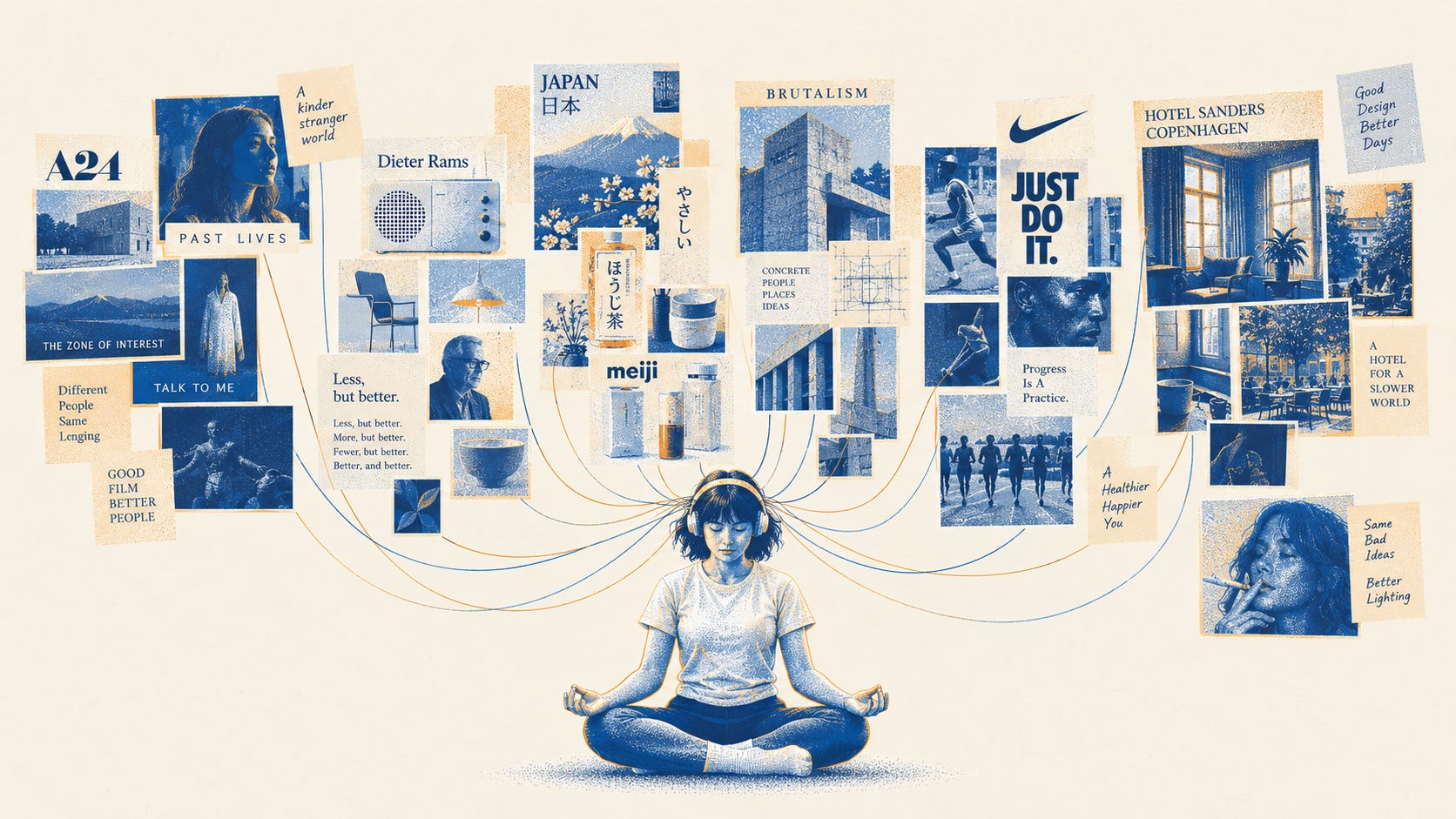
Taste matters enormously, but I think we sometimes confuse taste with simply knowing all the right things. The right designer, the right restaurant, the right campaign, the right obscure magazine somebody found ten years ago and refuses to shut up about. That’s useful, but that’s curation.
Taste goes further than that. Taste is judgment and discernment. It’s knowing what deserves your attention and what doesn’t. It’s sensing what feels alive, what already feels exhausted, what’s trying too hard, and when some tiny strange detail in the corner is actually more interesting than the thing everybody came into the room to discuss.
That becomes even more important when AI can give all of us access to an infinite reference library. Knowing the references isn’t enough. The machine knows them too, and probably knows more of them than any of us ever will.
What it can’t completely outsource for you is the decision about what matters here, right now, for this problem. Which detail should we keep? Which assumption should we question? Which connection actually means something? Which thing should we ignore even though everybody else thinks it’s cool?
AI made references abundant. That makes your ability to notice, choose and interpret more valuable, not less.
Don’t throw away the mood board
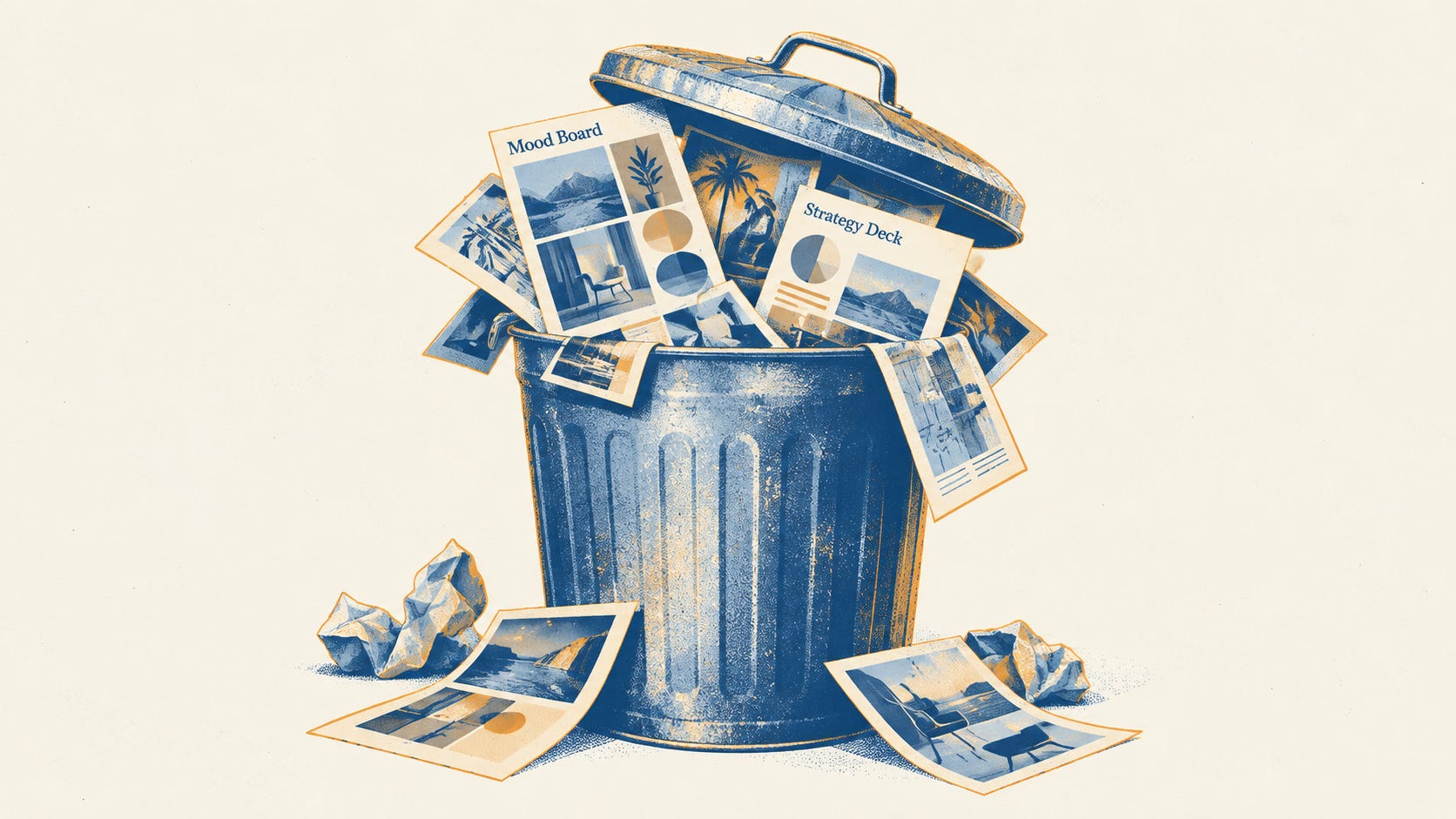
I’m not declaring war on mood boards. I’ll probably be staring at another one next week. References are useful. AI is useful. Research decks are useful. Dashboards are useful. Use all of them.
Just don’t confuse the map for the territory.
Before you ask the machine for another hundred ideas, spend some time somewhere it can’t go for you. Watch how people actually behave. Listen for the sentence your customer says that nobody in marketing would ever approve. Notice the hesitation before the decision, the workaround nobody officially owns, the thing that doesn’t fit neatly on the slide.
That’s where the interesting stuff is hiding.
The magic’s in the messy.
Everybody else has access to the same infinite intelligence. So your ability to notice and interpret that mess might be one of your most valuable creative advantages.
At GPC and DS, I have entire teams building creative intelligence engines every day. If you need one for your business, drop me a DM.
This is also the work I love doing most with leadership teams: getting close to the messy middle of a business, finding the human signals everybody has gotten too close to see, and turning those signals into sparks for products, positioning, experiences, and growth.
You don’t need another brainstorm. You need someone who’s paying enough attention to ask, “Wait. Isn’t that weird?”