

I’m sitting in one of those ridiculous San Francisco conference rooms, all glass, walnut, giant screens, and money, when my client points at the screen and shouts, “That’s it.”
The kind of shout that felt more like he just found out his wife was cheating on him, not that we just cracked the homepage headline.
We’d been sparring back and forth over the positioning for their new product launch. They manufacture robots and other things I can’t say much about yet, but the short version is they make the kind of products that have a real shot at changing the world with.
And we’d been stuck. Not f*cked stuck. The more annoying kind. Lots of smart ideas and things that were technically right. But none of them made you stand and shout, there it is.
And then the line showed up. My first feeling was relief. The second was shame.
He looked at me and said, “How the hell did you come up with that?”
I laughed and said, “Claude helped.” He laughed back, looked at me and said, “I use Claude every day. I don’t get anything that good.”
That line punched me in the gut. Because he was right and this is what made me write this entire article.
We had the same tool, recordings and word documents.
He was better at Claude than most people I know. So why did his deliver trash and mine delivered treasure?
You can call it prompting. You can call it context engineering. You can make up another fancy term for it but I think what happened was much more ordinary.
I approached the tool the same way I’ve learned to approach creative problems for the last twenty years.
I fed it hours of interviews, messy notes, contradictions, arguments, things the founders kept repeating, things they said once and forgot about. Then I started poking at the problem from strange angles. I asked questions that would look completely stupid in one of those “100 prompts that will change your life” LinkedIn posts.
Most of them went nowhere. Some opened another door. And eventually the machine threw something back at me that I knew was it.
That knowing is the part that separates the student from the master.
Claude didn’t sit in those rooms for twenty years learning why one sentence gives you goosebumps and another dies on a slide. It didn’t spend thousands of hours watching people react to ideas, getting things wrong, developing taste, noticing contradictions, learning when to keep digging and when to throw the whole thing away.
I did.
The AI gave me more range. More speed. More places to look.
That is what I mean by craft. And this is where I think we’re walking into something much bigger than another tool.
AI can make almost anyone dramatically more capable. That part is real. I experience it every day.
But capability comes with a strange temptation. The machine is so good at producing something acceptable that you can slowly stop doing the uncomfortable parts yourself. The wandering. The wrestling. The bad ideas. The weird questions. The moments where you don’t know what the hell you’re doing yet.
Those are also the places where imagination lives. So the question I can’t shake is this:
After months of using AI, are you becoming more imaginative? Or just more efficient at avoiding imagination?
The problem with AI is that it works
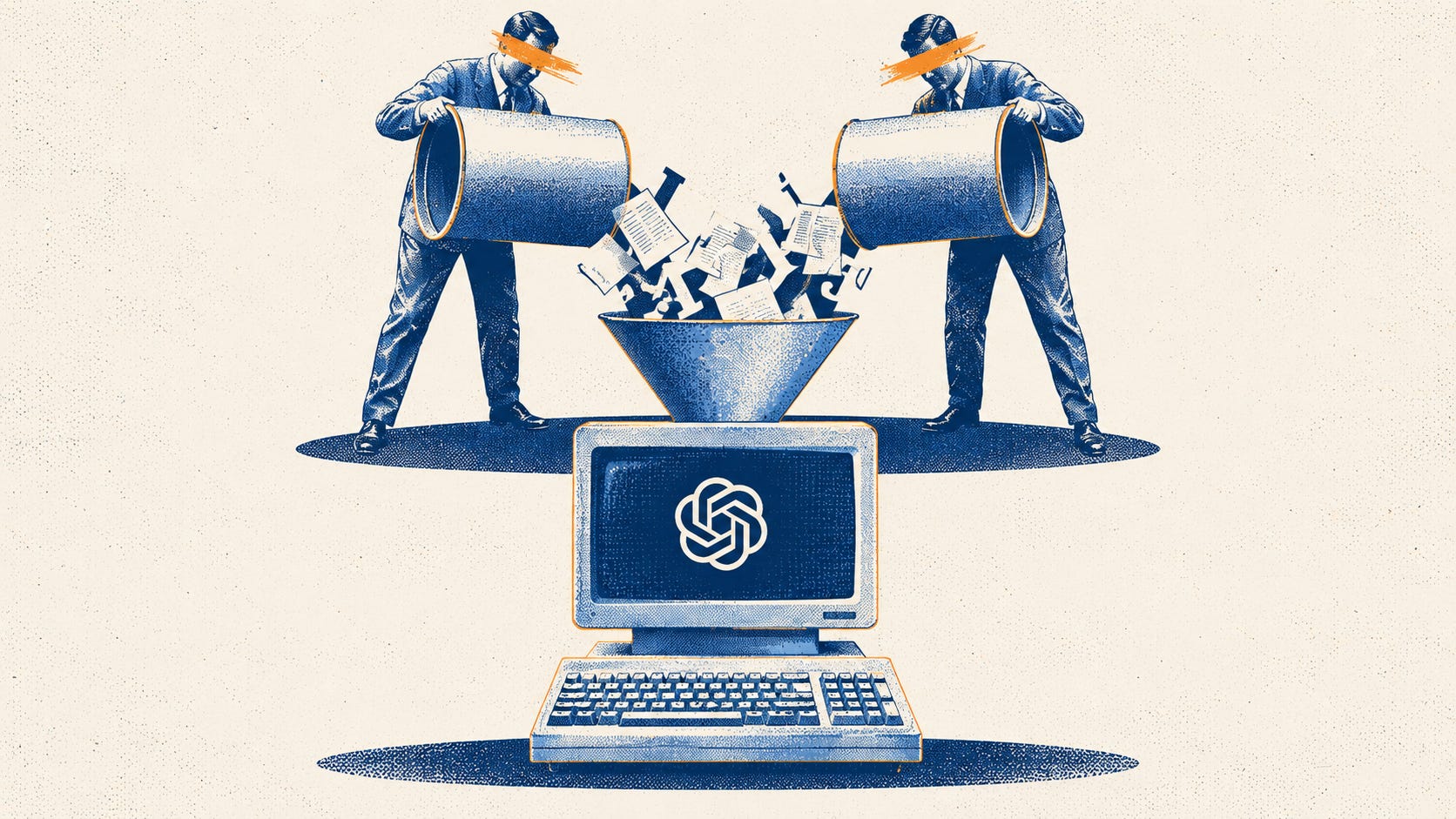
A few years ago, getting something from your head into the world required friction. You had an idea for an app? Somebody had to build it. A campaign? Somebody had to design it. A film? Good luck. Ten directions for a new brand? That was time, people, and money.
Now I can sit with Claude or ChatGPT and say, “Give me 50 ways to think about this,” and before I’ve decided what I want for lunch, I have 50 answers staring back at me.
That is incredible. It is also dangerous.
There’s a study I keep coming back to because it captures the whole problem perfectly. Researchers gave people a short-story assignment. Some had AI help. Some didn’t. The people with AI wrote stories that readers thought were better. More creative. Better written. More enjoyable. The biggest boost went to the people who weren’t especially strong writers to begin with.
Great.
Then the researchers laid all of the stories next to one another. The AI-assisted ones looked more alike.

That’s the trade.
AI made each person better while making the room more similar.
Once you see that, a lot of the internet starts making sense. Everyone writes pretty well now. Everyone can make the clean deck. Everyone can generate a decent landing page. Everyone can ask for 30 campaign concepts. Everyone can publish a professional-sounding LinkedIn post about leadership, resilience, innovation, uncertainty, or whatever flavor we’re on this week.
The floor came up. And somehow the whole room got beige.
That’s not a reason to stop using AI. Quite the opposite. It’s a reason to get much better at understanding what part of creativity still belongs to you.
Because generating something is the cheap part. Picking what matters is expensive.
This is why AI writing feels like AI writing
I know you know the feeling. You start reading something and four paragraphs in your brain goes:
Oh. ChatGPT wrote this.
Maybe there are too many em dashes. Maybe somebody said “delve.” But usually it isn’t one word that gives it away. Everything just feels... smooth.
The real lesson comes and smacks you in the head when you least expect it. The story wraps itself up nicely. Every paragraph knows its assigned job. Nothing contradicts itself. Nobody says something a little weird. Nobody leaves a thread hanging. Nothing feels like the author almost deleted it and then decided, screw it, leave it in.
It’s competent. And dead.
A team of researchers recently looked at more than 60,000 stories written by humans and AI and found that the difference goes deeper than obvious vocabulary. AI stories tended to follow cleaner paths. They explained their themes more directly. Human stories were messier, more ambiguous and more willing to wander.
I don’t think you need to remember the study name.
Remember this:
AI has creative gravity.
There are places it naturally wants to go. Ask for a leadership article and there is a neighborhood. Ask for ten startup ideas and there is a neighborhood. Ask for a new company mission and there is definitely a neighborhood. Ask for a campaign around “connection” and God help you, there is a very large neighborhood.
AI can get you to the middle faster than anyone ever could before. That’s useful. But the middle is not where the interesting stuff usually lives.
And here’s the part I think we conveniently forget when we complain about “AI slop.” The model didn’t publish it. You did. The model didn’t approve the campaign. You did. It didn’t put the generic strategy in front of the board and say, “We’re done.”
You did.
AI can absolutely make slop. But slop becomes your work when you accept it.
That’s why I don’t think this is primarily a generation problem. It’s a judgment problem.
We may have taught everyone the worst possible way to use AI
Think about how most people learned to use these tools. Open ChatGPT. Type:
Give me ten ideas for...
And wait.
We did that because it was magical. For a while, simply watching the thing answer was enough to blow your mind. But now I’m wondering if we accidentally taught ourselves to hand over one of the most important parts of the creative process too early.
The beginning.
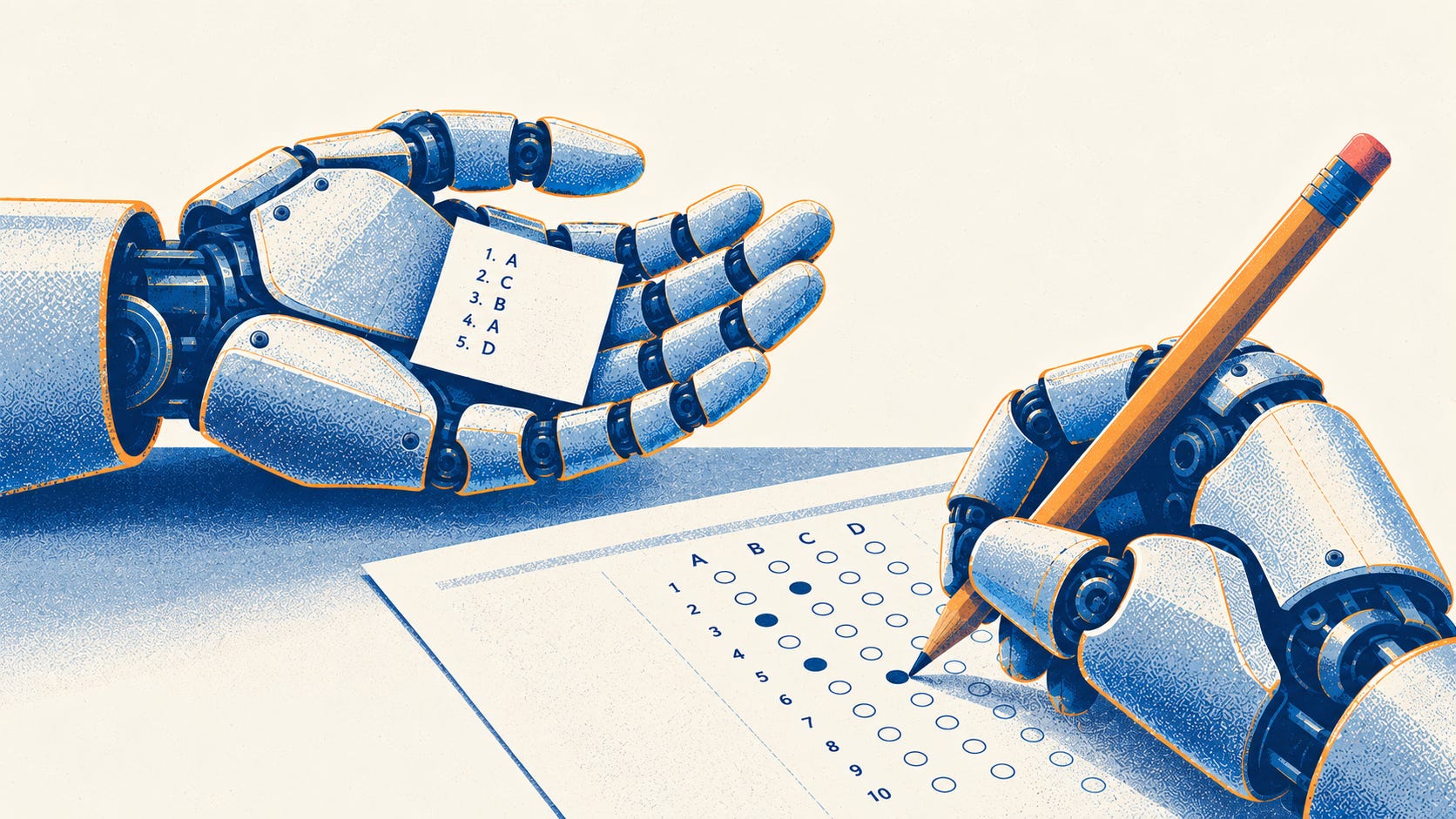
Researchers studying human-AI collaboration keep finding some version of this pattern: AI can help people create better work, but where you bring it into the process matters. When humans keep meaningful control early, the work tends to stay more varied. When AI takes the wheel too soon, people start reacting to whatever it generated first.
You know this feeling even without reading a paper. Imagine I put you alone in a room and say, “Come up with five ideas for what this company could become.” You stare at the ceiling. You draw something stupid. You remember a conversation from three years ago. You hate your first idea. Something else shows up.
Now imagine I walk in first and place ten polished ideas on the table. Even if I tell you to ignore them, good luck.
They’re in the room now.
That’s the trap.
So here’s the first rule I want you to steal:
Have a thought before you ask the machine for one.
Ten minutes. That’s it.
Before you open Claude, write down what you think.
What’s strange about the problem?
What do you think is really happening?
What doesn’t make sense?
What are you assuming?
What did the customer actually do?
What are you almost embarrassed to suggest?
What would you try if nobody could tell you it was stupid?
It doesn't need to be brilliant or even fully legible. Shitty first drafts make great kindling for the creature fire that comes next.
The point is to put some of you into the room before we let the alien intelligence move the deck chairs.
Then bring the machine in. Now you have something to collide with.
Stop treating your AI like an oracle. Treat it like an intern trying to get a promotion
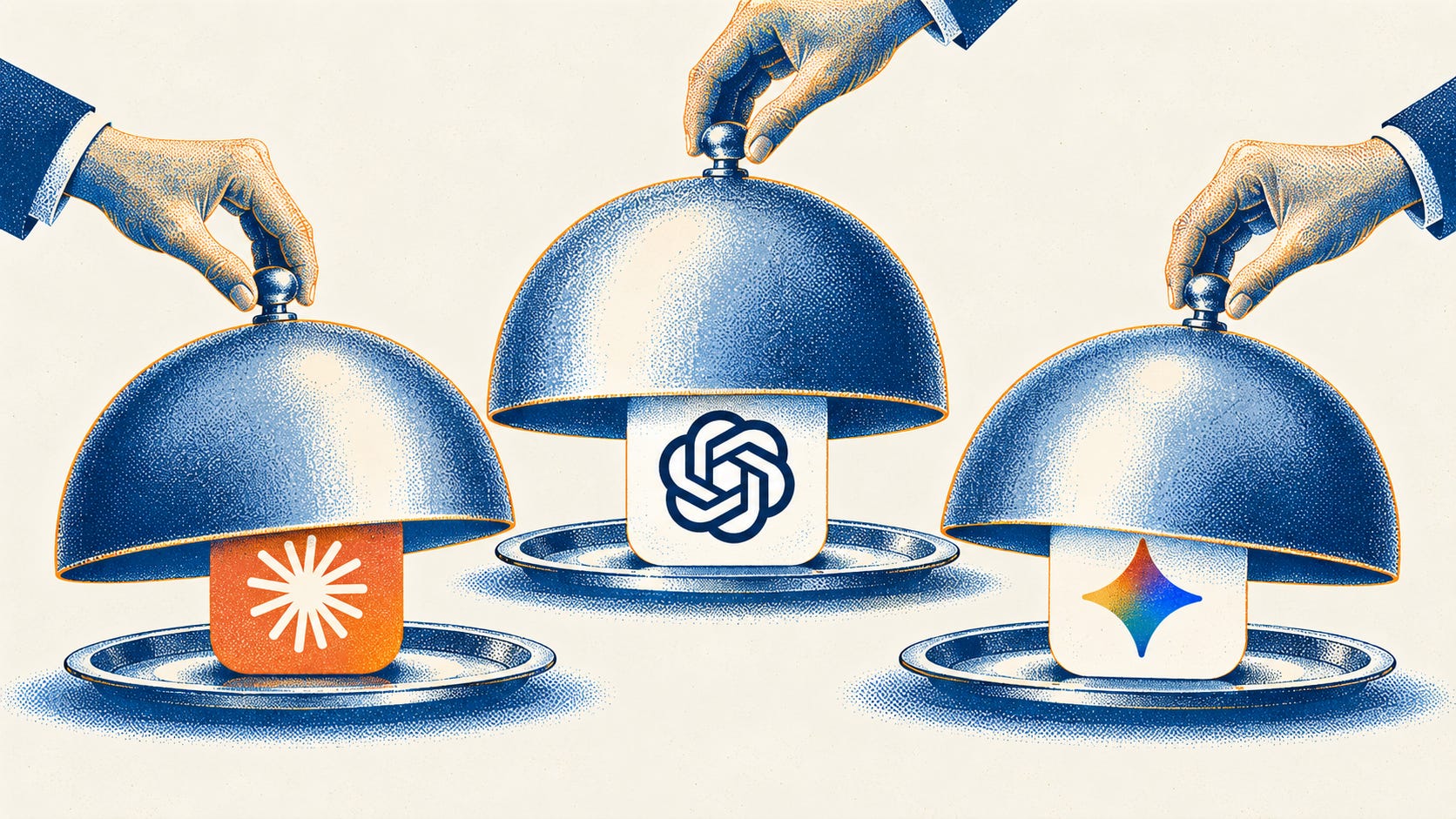
This is where I think a lot of people are leaving creativity on the table. We treat AI like an oracle.
“What should I do?”
“What’s the strategy?”
“Give me the campaign.”
“Write the article.”
“Come up with the product.”
That is certainly one way to use it. I think it’s one of the least interesting ways.
I’d rather give AI a bunch of different jobs depending on where I am in the process. Sometimes I want it to challenge the question. Sometimes I want 200 possibilities. Sometimes I want it to show me how somebody in an industry I’ve never worked in solved a similar problem. Sometimes I want it to destroy my favorite idea. Sometimes I want it to make something ugly enough that another human can react to it.
Those are completely different jobs.
And that matters because simply putting a smart human and a smart AI together doesn’t automatically create some kind of creative superhuman. One large review looked across more than 100 experiments involving humans working with AI. On average, the pair usually beat the human working alone. But they didn’t reliably beat whichever side was already best at the task.
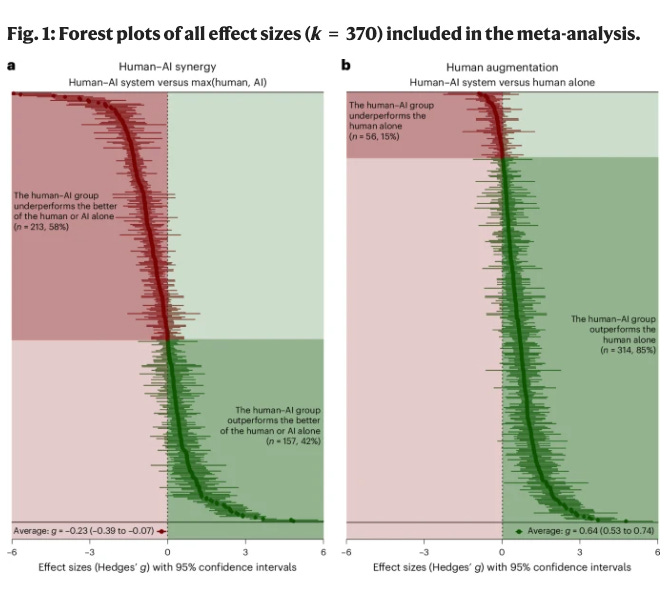
In plain English:
Human + AI doesn’t automatically equal magic.
You still have to decide who does what.
So here are the jobs I’ve been experimenting with.
1. Change the frame before you solve it
Most of the time, we ask AI to solve the problem exactly as we handed it over. That’s a mistake. The way you frame a problem determines what answers can appear.
Say the problem is: “How do we get employees to use our AI tools more?” You could spend six months answering that question.
Or maybe the better question is, “Why would an employee voluntarily use our AI tool tomorrow morning?” Or, “What work do people hate enough that they’d gladly change how they do it?” Or, “Why are they already secretly using something else?”
The question is the answer. New approach, new possibilities.
I also like asking AI to show me the center before we leave it. Give me the fifteen obvious answers a competent team would probably produce. What assumptions do they share? Now ban them.
Map the obvious territory first. Once you can see where everyone else is likely to land, it gets much easier to push somewhere more interesting.
Here’s a version I use:
Break my frame
I’m going to give you my current interpretation of a problem.

Do not solve it yet.

First, tell me what assumptions are hiding inside the way I framed it.

Then give me seven genuinely different ways to look at the same situation.

I do not want seven answers to my question. I want seven different versions of the question.

For each one, tell me:

1. what assumption it breaks
2. what becomes visible that I couldn’t see before
3. what kind of solution becomes possible from this new view

Here is my current thinking:

[PASTE]
The goal isn’t to make the AI smarter. It’s to make your field of view bigger.
2. Send AI somewhere you would never think to look
This is probably my favorite use of AI for creativity.
Creativity has always loved strange combinations. A hospital borrows from Formula 1 pit crews. A retailer borrows from gaming.
Somebody looks at a problem everyone has been staring at for ten years, brings in something from a completely different world, and suddenly the answer moves.
AI is ridiculously good at helping you cross those distances. So use it for that.
Try to force a distant collision
Here is the problem:

[PROBLEM]

Find seven fields, industries, subcultures, scientific ideas, historical examples, natural systems, games, rituals or art forms that seem unrelated to this problem but have solved something structurally similar.

Avoid common business examples.

For each one:

1. explain the similar problem
2. show me how that world handles it
3. pull out the underlying principle
4. show me how the principle could change my situation without copying the surface idea

Then take the two strangest principles and combine them into a new direction neither one would create alone.
When we stop treating our AI like a vending machine it can transform into a telescope.
3. Make the machine fight your taste
There was a small but interesting design study that compared novice designers with experienced ones using AI.
Both groups got better. But not in the same way.
The beginners leaned on AI heavily to come up with ideas. The experienced designers used it more to sharpen and refine ideas.
That feels obvious once you hear it, but I think there’s a huge lesson inside it:
AI the gear, you are the guide.
A beginner looks at fifty options and thinks, “Holy shit, fifty options.” An expert looks at the same fifty and starts killing forty-seven of them. That is expertise.
Knowing what’s missing. Knowing what feels cliché. Knowing which beautifully executed thing is strategically useless. Knowing why the weird ugly option is the one you shouldn’t throw away yet.
The tool gives you more doors. Taste tells you which one might actually go somewhere. That’s why, once I have an idea I like, I stop asking AI to help me and start asking it to fight me.
AI is almost suspiciously helpful. Give it an idea and suddenly:
“That’s a powerful direction, Pete.”
Is it? Or are you just being nice because your job is to help me and I pay you a subscription every month?
Creative work needs friction.
Creative adversary
You are not my assistant for this exercise.

You are a skeptical creative director whose job is to stop competent but forgettable work from shipping.

Do not compliment this idea.

Tell me:

- what feels generic
- what feels borrowed
- where I am playing it safe
- what another person using the same AI would probably come up with
- what I’m over-explaining
- where the idea becomes predictable
- which assumption I never actually challenged
- what one strange or original part I should protect

Then ask me seven questions you cannot answer yourself.

Force me to bring in real experience, customer knowledge, memory, taste, contradiction, values or an actual point of view.

Do not rewrite the idea until I answer.
That final sentence matters. Otherwise Claude will criticize your idea and immediately solve all of its own criticism for you.
Congratulations. You’re back to watching.
Make yourself participate.
Keep your fingerprints on the thing
There’s another study I love because it describes a workflow I see everywhere.
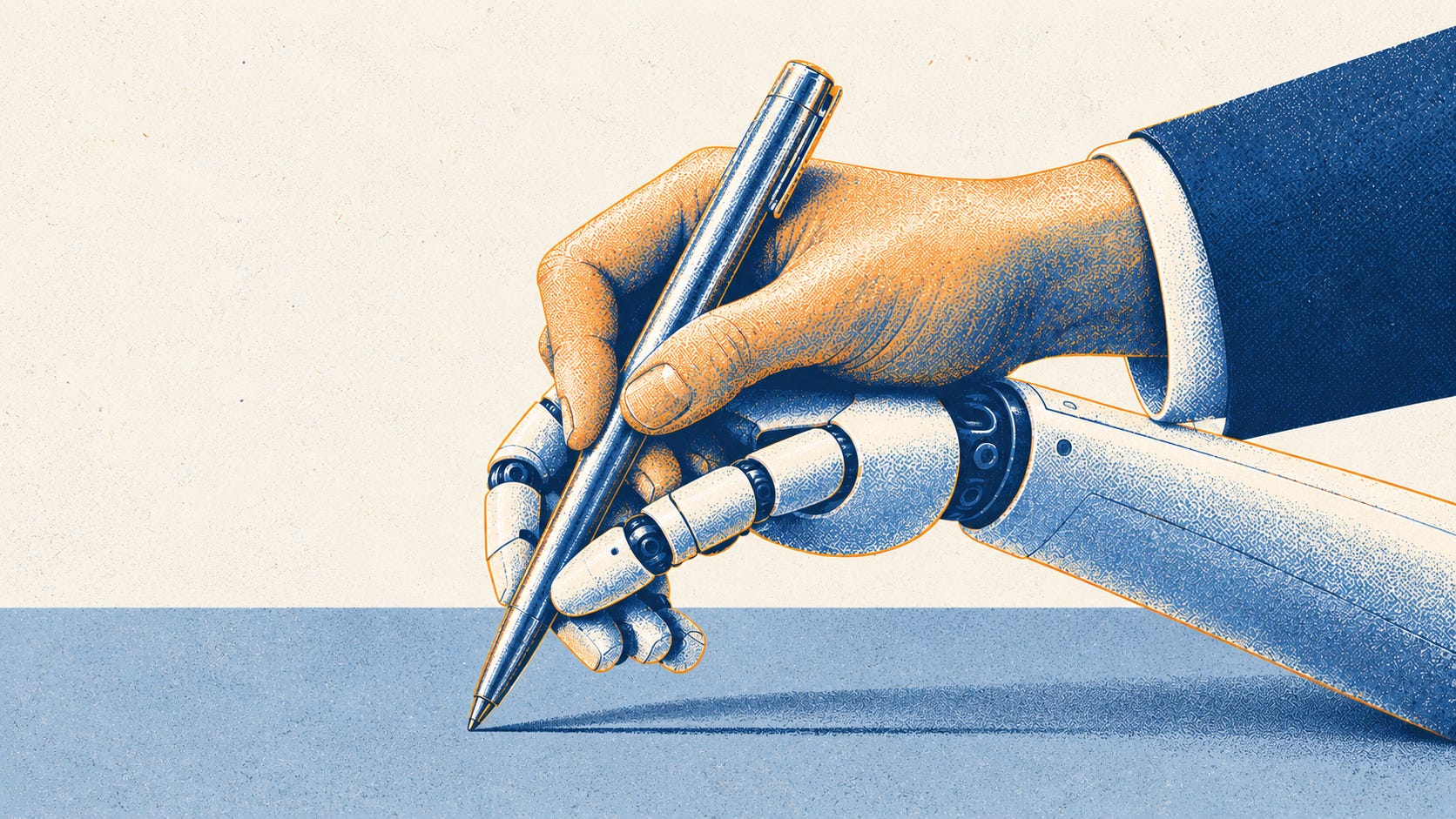
Researchers had people write poetry in different ways. Some wrote alone. Some were given AI-generated work and asked to edit it. The people editing the AI work actually became less creative than the people who simply wrote by themselves.
Then the researchers changed the setup. Instead of making the human the editor, they created more of a back-and-forth co-creation process.
The creativity gap disappeared.

I don’t care that it was poetry.
Look at how most companies are using AI. AI writes. Human edits. AI creates the deck. Human cleans it up. AI makes the image. Human adjusts it. AI generates the strategy. Human “adds context.” AI comes up with the ideas. Human picks one.
We are slowly turning people into the janitorial staff of machine-generated work.
I don’t want that job.
A much better loop is: Human starts. AI expands. Human reacts. AI challenges. Together you make. Human chooses.
Keep your fingerprints on the thing.
There’s a very unsexy word in creativity research for part of this: metacognition. Ignore the textbook word. It basically means thinking about thinking.
Am I solving the right problem? Why did I accept that answer? Did I actually believe that idea before Claude said it? Did AI help me see more, or did it simply give me permission to stop thinking?
A 2025 workplace study found that people who actively monitored and changed their own approach while using AI got more creative benefit from it.
The better AI users weren’t necessarily the people with the cleverest prompts. They were the people paying attention to themselves.
We spend a lot of time teaching prompt literacy.
I think we need a lot more thinking literacy.
And there’s one thing no prompt can manufacture for you.
The one dataset the machine doesn’t have
There’s a recent paper about AI creativity that uses the word authenticity.
I think we can say it more simply.
AI doesn’t have a childhood. It doesn’t have an ex. It never bombed a pitch and thought about it for six years. It has never sat across from a customer who said one thing while their face said something completely different. It has never been embarrassed in a meeting, fallen in love, ruined a good idea or stayed awake at 2:13 in the morning because something just didn’t sit right.
You have.
That matters.
Human creativity is built partly out of this weird pile of accumulated residue. Memories. Preferences. Wounds. Obsessions. Things we noticed without knowing why. Things somebody said ten years ago that suddenly connect to the problem sitting in front of us today.
Which makes it kind of insane that we strip all of that out when we use AI.
We give it:
“Write an article about creativity and AI.”
Then blame the machine when it sounds like it was written by nobody.
AI can create without having an autobiography.
You have one.
Use it.
My creative operating system
I’ve spent most of my life bouncing between things that supposedly don’t belong together. Brand. Technology. Business. Design. Storytelling. Behavior. Products. AI.
After enough years of doing it, I realized the creative process underneath all of them looks pretty similar.
I call it:
Feel. See. Connect. Make. Encode.
You don’t need to tattoo that on your forearm.
FEEL: What is really going on with the human?
Before the strategy, before the AI, find the person. What do they want? What annoys them? What are they doing that never makes it into the brief?
AI can sort interviews and find patterns. It can’t attend the customer conversation you never had.
SEE: What are we not noticing?
Every problem comes with a frame, and sometimes the frame is the problem.
Challenge what everybody has learned to repeat. Look for the assumption hiding underneath the brief.
CONNECT: Where else has somebody solved this?
This is where I let AI run.
Take the problem into worlds you don’t know. Biology. Restaurants. Airports. Video games. Magic shows. Religion. Architecture. Streetwear. Whatever gives you a useful collision.
Creativity often happens when two things that weren’t supposed to meet suddenly do.
MAKE: Stop talking about it
Once something feels interesting, make it visible. A prototype. A fake landing page. A storyboard. A workflow.
The minute you make it real, reality gets a vote.
AI has made that part unbelievably cheap. Use that gift.
ENCODE: Why was that one better?
Version three worked. Why?
That sentence sounded right. Why?
Pull the judgment out of your head and turn it into a rubric, checklist, Skill or standard.
That’s how your taste starts to travel.
I turned this into a Claude Skill
I wanted this behavior to follow me into the work, so I turned the whole thing into a Claude Skill I call Creative Adversary.
Think of it as the playbook I’d give a creative partner before we started working together.
Challenge my frame. Show me where I’m being predictable. Find distant connections. Ask for information you couldn’t possibly know. Tell me when I’m smoothing out the strange part that might actually make the idea good.
Most importantly, don’t do all the creative lifting for me.
The instruction underneath the whole thing is simple:
Do not replace my imagination. Create productive friction around it.
I packaged the full Skill below if you want to steal it, adapt it, or drop it into Claude.

The Anti-Slop Audit
Before you publish, pitch, present or ship anything AI helped make, ask yourself seven questions.
Is it specific? Could this have been made for any company, person or audience?
Is there a point of view? Does it actually believe something a smart person could disagree with?
Is there a surprise? Does anything change how somebody sees the problem?
Did you leave useful tension alive? Or did AI neatly resolve every contradiction?
Did you bring in context the model couldn’t have guessed? Real behavior, memories, customer knowledge, history, weird details.
Can you explain why you chose this version? Not why it is technically good. Why this one.
Did you get better? Did the process improve your ability to think, or did it just get the task off your list?
If most of those answers make you uncomfortable, you probably do not have an AI problem.
You have a judgment problem.
This is what I mean by Applied Imagination
AI can make the work faster. It can make the work better. But the part I keep coming back to is what it makes different.
What becomes possible once an old constraint disappears? What idea suddenly becomes cheap enough to test? What experience used to need a huge team? What if the prototype is now cheaper than the meeting where everyone debates whether to build it?
That’s what I mean by Applied Imagination: using AI to widen what feels possible, make ideas real faster, and then applying human judgment to what deserves to survive.
I’ve gotten so obsessed with this idea that I made an entire visual essay about it
The machine can give you 10,000 possibilities.
You still have to recognize number 6,417.
Don’t let AI make you less necessary to yourself
There’s one part of the research I almost left out because it isn’t really about creativity scores.
It’s about whether the work still means anything to the person doing it.
And I think it might be the most important part.
A 2026 paper looked at what happens to meaningful creative work as AI does more of it. The researchers talk about autonomy, skills, significance and whether you still feel connected to the thing you made.
Which sounds academic until you think about your own career.
You got good because you did the repetitions. You developed taste because you made terrible things. You developed judgment because you made decisions and had to live with them. You learned what “good” meant because clients rejected things, customers surprised you, ideas failed, people misunderstood you, and sometimes something worked for a reason you didn’t expect.
The process didn’t just produce the work.
The process produced you.
That is what I do not want us to accidentally automate away.
If AI does the hard part every time, maybe you still get the artifact. But what muscle did you not build? What judgment did you not earn? What opinion never formed because you never had to make the choice?
So here is the standard I keep coming back to:
The best AI workflow should leave the human more capable than when they entered it.
Not just faster.
More capable.
You should understand the problem better. You should know more about your own taste. You should have a stronger point of view. You should have seen something you didn’t see before.
You should be better equipped to do the next one.
That is the kind of AI future I actually want.
So, is AI creative?
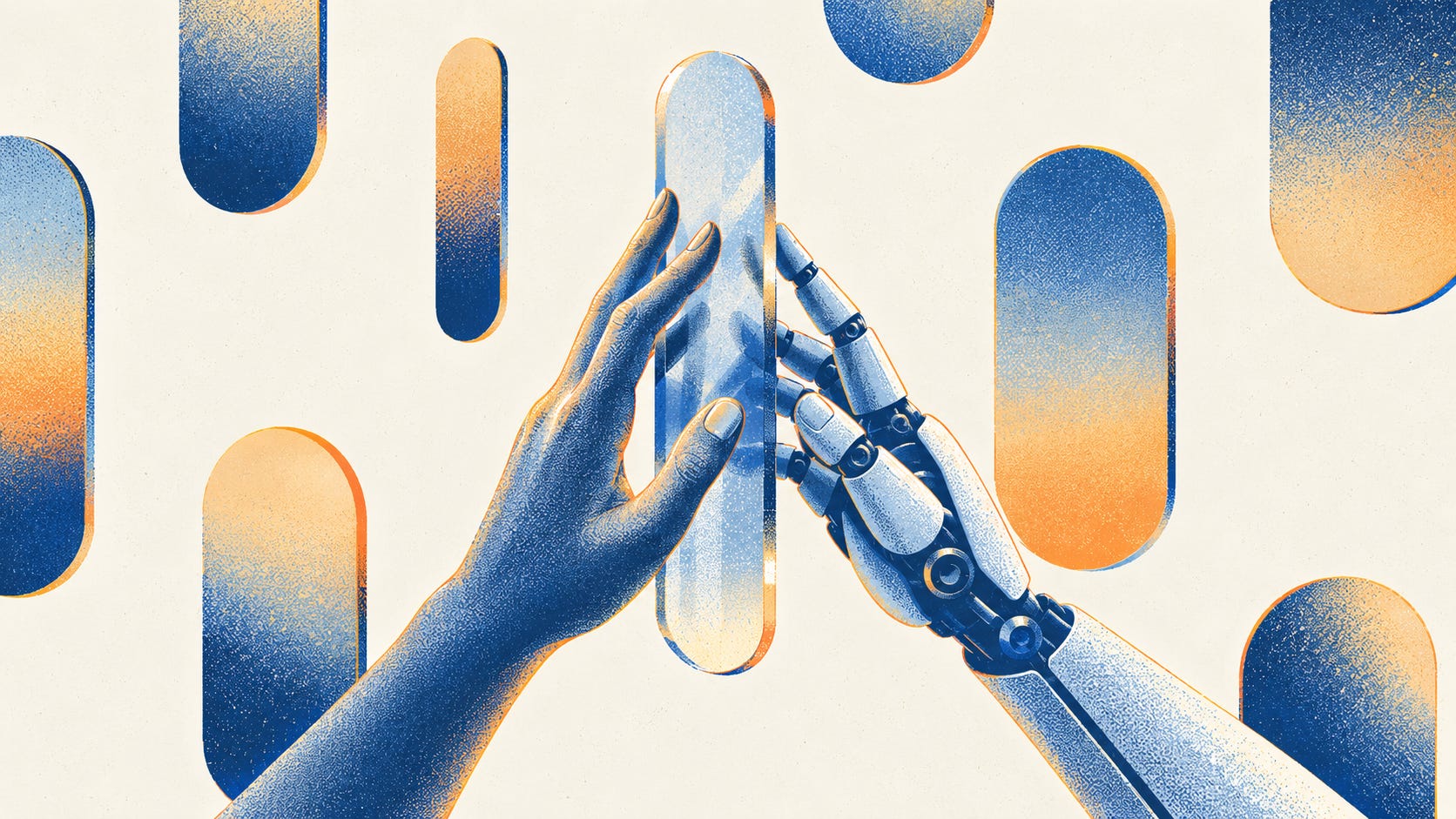
Sure.
At this point, I don’t think arguing about that gets us very far.
It can come up with novel ideas. It can make strange connections. It can outperform average humans on certain creativity exercises. It can make people’s creative work better. It can also make everybody’s work more similar.
It can help beginners get somewhere faster. It can help experts explore more possibilities. It can make a human more creative. It can make a human lazy.
It can do all of those things because the machine is not the whole system.
You are in the system too.
The creators who thrive in this next chapter won’t be the ones with the longest prompts. They’ll know when to bring the machine in and when to leave it out. They’ll know when to open the field and when to narrow it. They’ll know how to make a hundred things and kill ninety-nine.
They’ll know what the machine knows.
More importantly, they’ll know what they know.
Taste. Context. Stories. Scars. Standards. A point of view.
AI is going to generate a truly unbelievable amount of slop.
But it doesn’t decide what goes into your portfolio. It doesn’t decide which campaign gets approved. It doesn’t decide what your company publishes. It doesn’t decide what gets your name on it.
You do.
The machine generated it.
You still have to decide whether it ships.
As AI drives the cost of creation down, the scarce skill may become knowing what not to create. Output volume stops being much of an advantage, while judgment and editing become the real differentiation.