

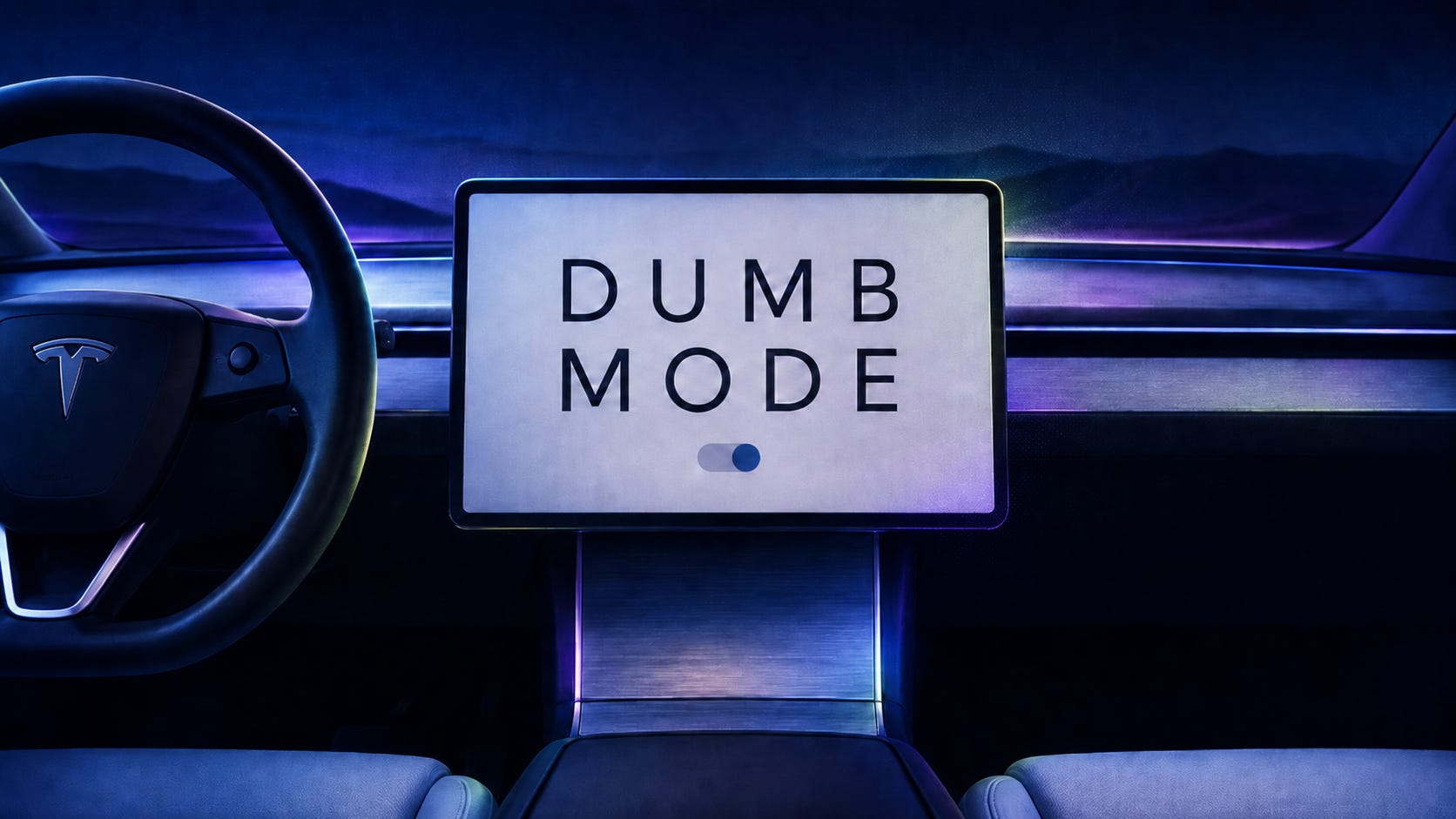
I bought a car that made me worse at driving.
That is not a sentence Tesla will be putting in a commercial, but it is unfortunately true.
Since getting my new one, I use Autopilot for probably 95 percent of my driving. Highway. Traffic. Lane changes. The tiny micro-adjustments my hands used to make without asking permission from my brain.
At first it felt like magic. Then it felt normal. Then one day I actually had to drive.
Not sit in the driver’s seat.
Drive.
Hands on the wheel. Eyes scanning. Body making calculations. How fast is that car coming up on my left? Do I have the gap? Is this guy drifting? Why does this lane suddenly feel like it was designed by someone who hates me?
And I felt anxious.
Not because I forgot how to drive. I have been driving for decades. But something in me had gotten softer. A skill I used to trust without thinking suddenly wanted supervision.
That scared me a little.
Not in a dramatic way. In a stinging, embarrassing, “oh, this is how atrophy happens” kinda way.
First the machine helps you. Then the machine handles it. Then one day the thing comes back into your hands and your hands feel less like yours.
That is what I keep thinking about with AI.
We aren’t just outsourcing tasks now. We’re outsourcing first drafts, first thoughts, first questions, first interpretations, first attempts at language, first attempts at judgment.
The danger is not that AI does things for us.
The danger is that it does the wrong things first.
Because the first pass is where you find out what you think.
The Three Words That Flatten You
The most dangerous AI prompt might be three words long.
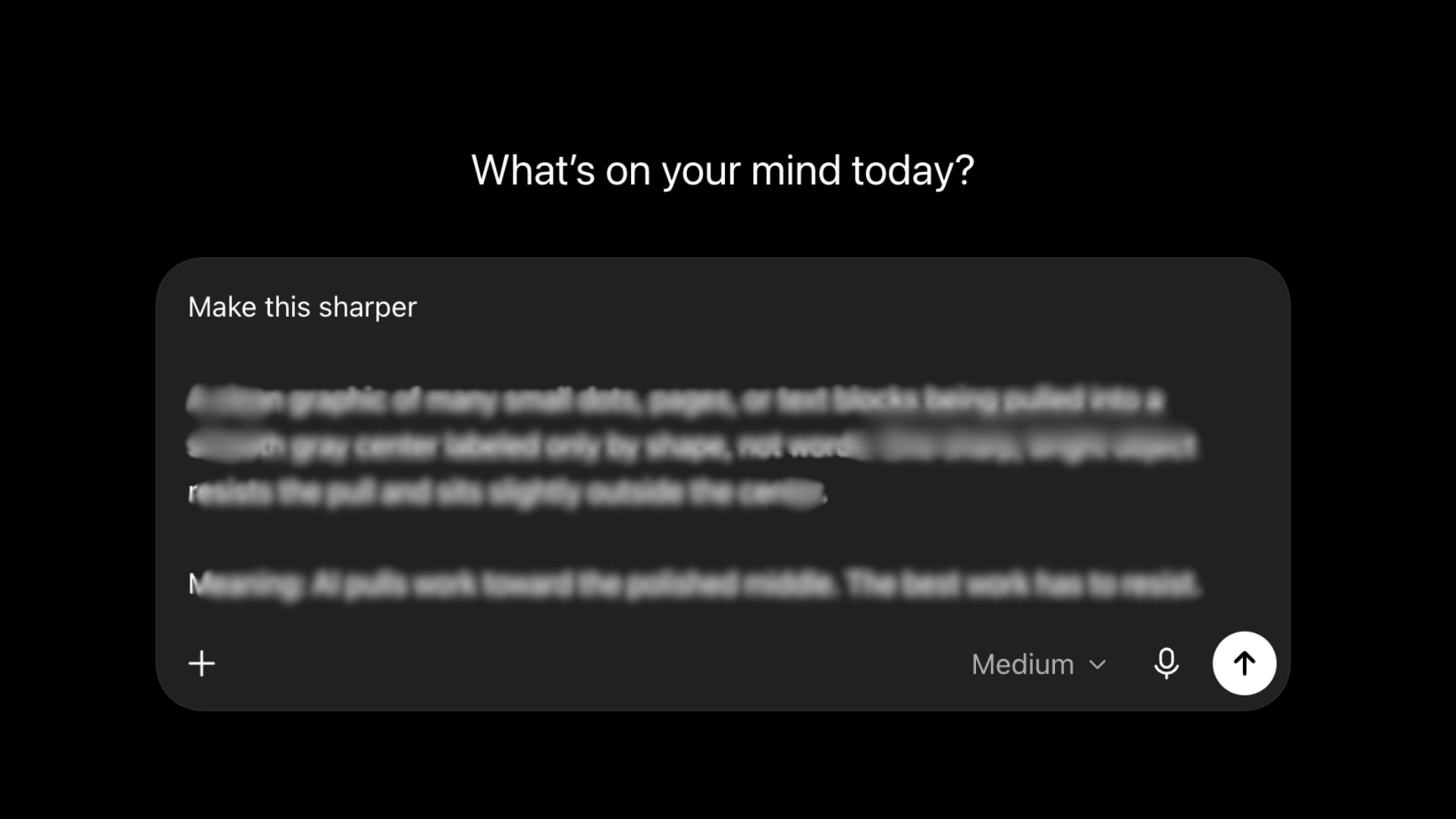
Make this sharper.
I see it everywhere. A founder has a sales email that feels soft. A strategist has a deck that almost says something. A writer has a post that sounds fine, which is usually the first sign that it is not fine at all.
They type the magic little sentence.
Make this sharper.
The machine obeys. It trims. It polishes. It adds confidence. It makes the thing sound more like something a competent person would post on LinkedIn after two coffees and one mild identity crisis.
Then the person reads it and feels the tiny hit.
Better.
Except it is not better. It is smoother.
And smooth is not sharp.
AI does not know what sharper means. It knows shorter, cleaner, warmer, more formal, more casual, more structured, more polished.
Sharper requires a standard. Sharper requires taste.
Sharper requires knowing what the work is supposed to do, who it’s for, what truth it is carrying, what must be removed, and what line should make the reader sit back because it found the bruise.
That is not the machine’s job. It’s yours.
AI is the gear. You are the guide.
Gear can help you climb faster. Help you carry more weight. But gear does not choose the mountain. Gear does not know your standards. Gear does not know what kind of person you are trying to become.
Hand the gear the map, the compass, and your sense of self, and it will quietly walk you toward the middle.
The Middle Has Gravity
The middle is where most AI output wants to go.
Models are trained on a giant pile of language, habits, patterns, cliches, templates, and repeated thoughts. They predict what usually comes next.
That is the miracle. It’s also the freaking trap.
Your best work rarely lives where the most probable next word (token) lives. Your best work lives in the scar. The weird angle. The personal rule. The earned belief. The thing you noticed because you were actually in the room when the room went quiet.
The machine can help you find that. Left alone, it often pulls you away from it.
It will make you sound reasonable. It will make you sound polished. It will make you sound like everyone else who asked the same model to improve the same kind of thing.

The research is starting to catch up. A Microsoft and Carnegie Mellon study of 319 knowledge workers found that higher confidence in GenAI was linked with less critical thinking, while higher self-confidence was linked with more critical thinking. The people who trust themselves use AI better. The people who over-trust the machine hand over the wrong layer. Microsoft Research

Another study found that GenAI improved individual creative output, but AI-assisted stories became more similar to each other. AI helped people make better work, but the work started clustering toward sameness. arXiv

A 2026 meta-analysis from Tilburg University looked across 19 studies and 61 effect sizes and found a small but real homogenization effect in human-AI co-creation. Their language is careful. Mine is simpler. AI can pull the crowd toward the same polished middle. Tilburg University
That is the uncomfortable truth.
AI can raise the floor and lower the ceiling at the same time.
It can make weak work decent. It can make slow work fast. It can make blank pages less terrifying. Used lazily, it can also sand down the edge that made the work worth making in the first place.
Microplastics For The Mind
I have called this CrapGPT before. Microplastics for the mind.
A little generic email here. A little AI-polished post there. A little “make this sound more professional” before lunch.
None of it feels dangerous in the moment. That is the problem. It feels useful. It feels productive. It feels like friction went away.
Then one day your work has no pulse.
Your voice sounds borrowed.
Your taste goes quiet.
You start accepting words because they are clean, not because they are true.
That is how the flattening happens. A little residue at a time.
The answer is not to stop using AI. I use this technology every day. I build with it, think with it, argue with it, test ideas against it, and use it to move faster through the fog.
But speed without standards is just faster drift. And the new skill is not knowing which model to use.
The new skill is knowing what part of yourself should never be delegated.
Sharper Is Not A Vibe
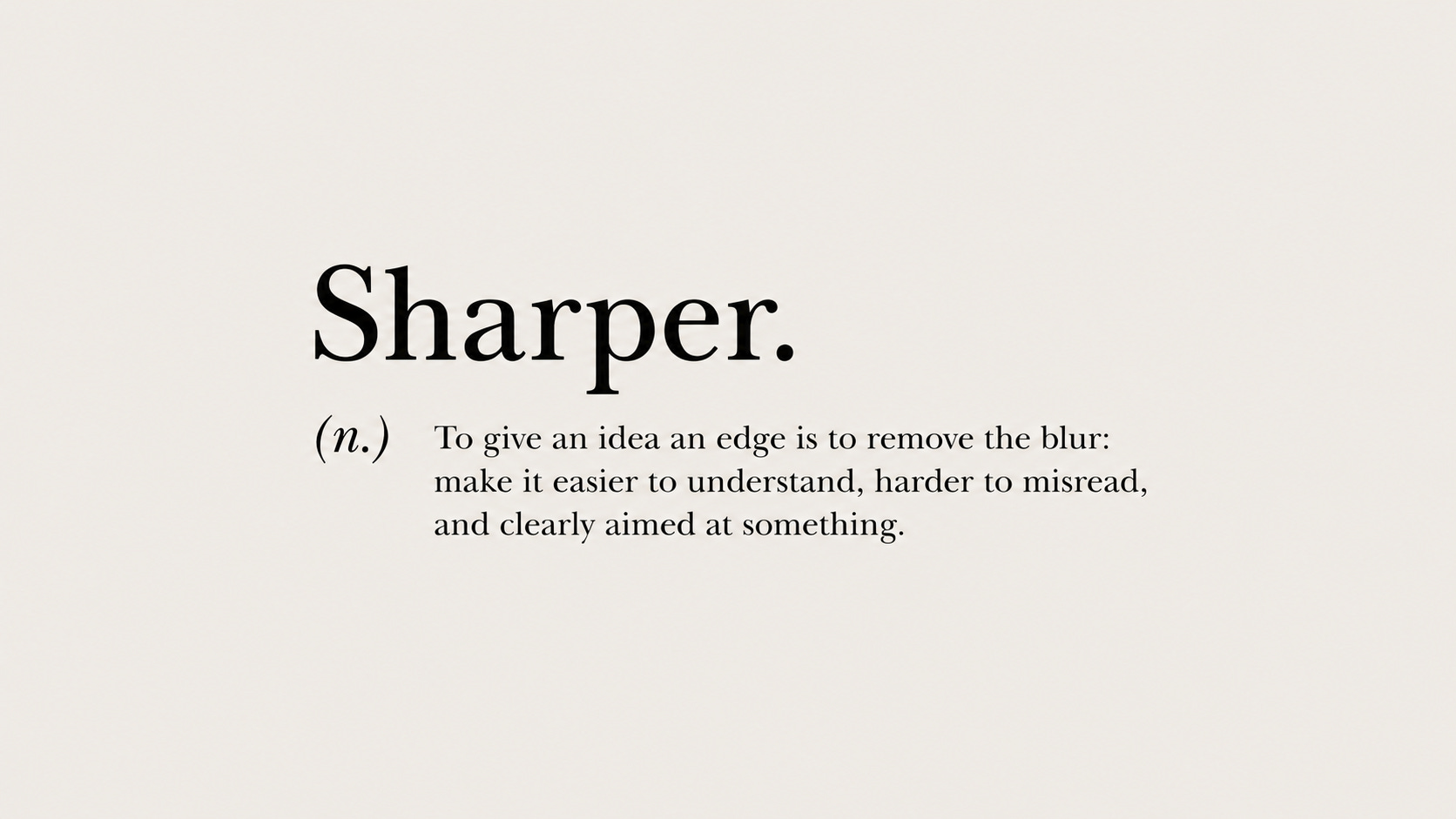
AI cannot make something sharper until you define what sharper means.
Sharper might mean more specific. More emotionally honest. More commercially direct. More useful to the reader. More dangerous. More restrained. More evidence-backed. Less performative.
Those are different jobs.
A machine can’t choose between them without borrowing a value system from somewhere.
So give it yours.
Before I ask AI to improve anything now, I define the standard.
For this piece, sharper means the idea must be easy to repeat. The enemy must be clear. The science must support the claim without turning the piece into homework. The reader must feel slightly implicated. The payoff must be useful enough to save. The voice must sound like a person who has lived the problem.
That is a real brief.
“Make this sharper” is not.
The Spike Stack
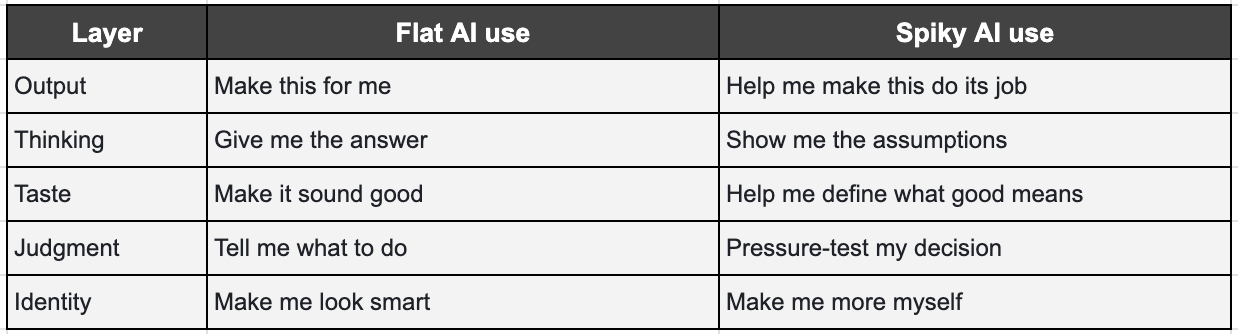
That last row is the whole game.
The best AI use does not erase your fingerprints. It makes them harder to fake.
Flat AI use makes you sound like the meeting notes from a company that has lost the will to tell the truth.
Spiky AI use makes you more specific, more discerning, more useful, more yourself.
Use AI As A Challenger
Most people use AI like a butler.
Do this. Write that. Summarize this. Make me look prepared.
That is fine for low-stakes work. I am not here to shame anyone for using AI to clean up a calendar invite.
But the work that matters needs a different posture.
Use AI as a challenger.
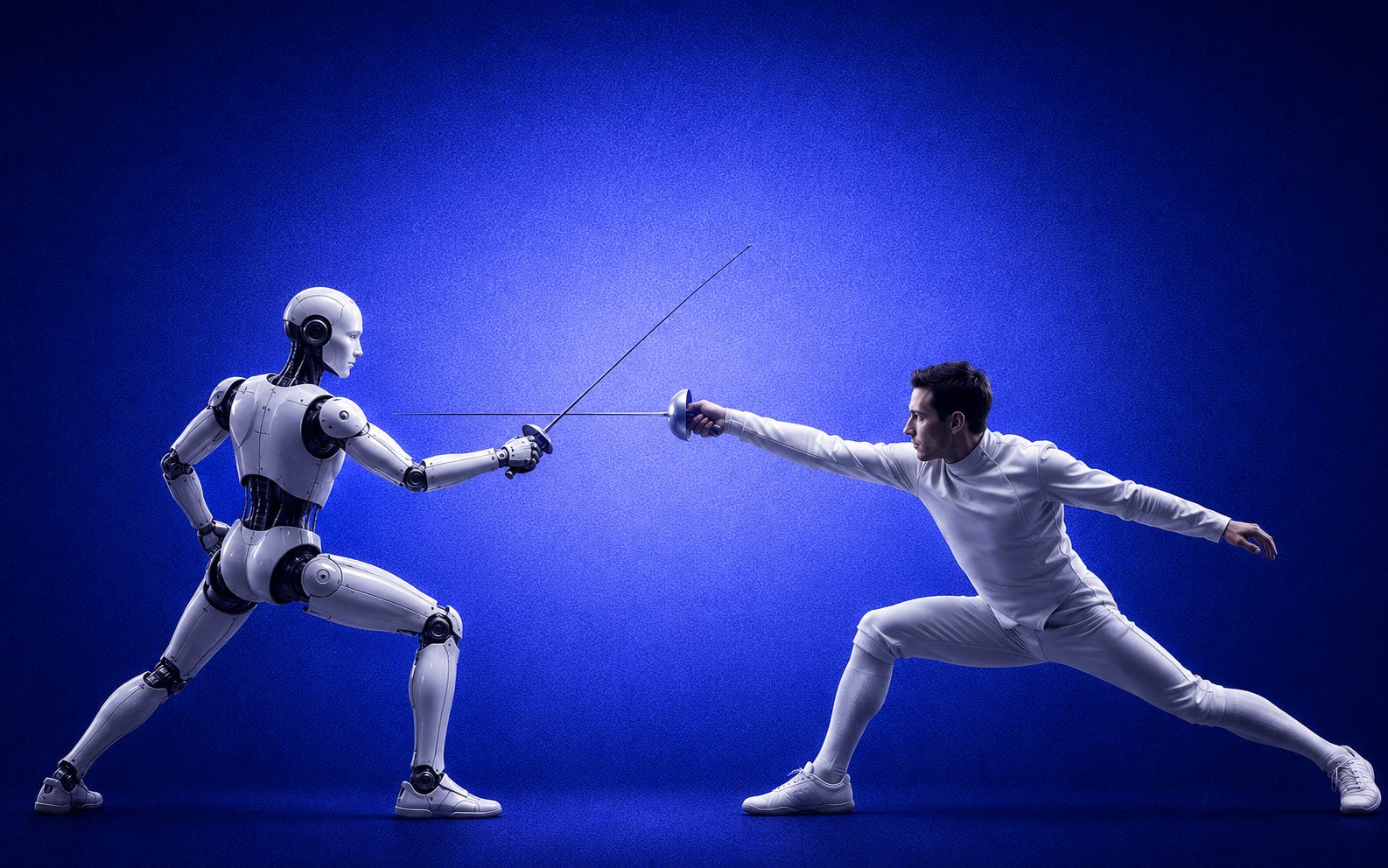
Ask it to find the weak claim. Ask it to name the assumption. Ask it to show where you are hiding behind language. Ask it what a skeptical buyer would reject. Ask it what sounds like everyone else. Ask it what only you could say.
A 2025 arXiv study tested “provocations,” short AI-generated critiques and alternatives added to AI suggestions. The researchers found that these provocations could trigger critical and metacognitive thinking.
Translation: AI got more useful when it stopped simply obeying and started making the user think. arXiv
Good AI should not replace your reps.
It should make the reps better.
It should not remove the friction.
It should add the right friction.
Because friction is not always failure. Sometimes friction is the gym.
The Lens Before The Prompt
This is why I have been thinking so much about lenses.
A lens is the frame that decides what becomes visible.
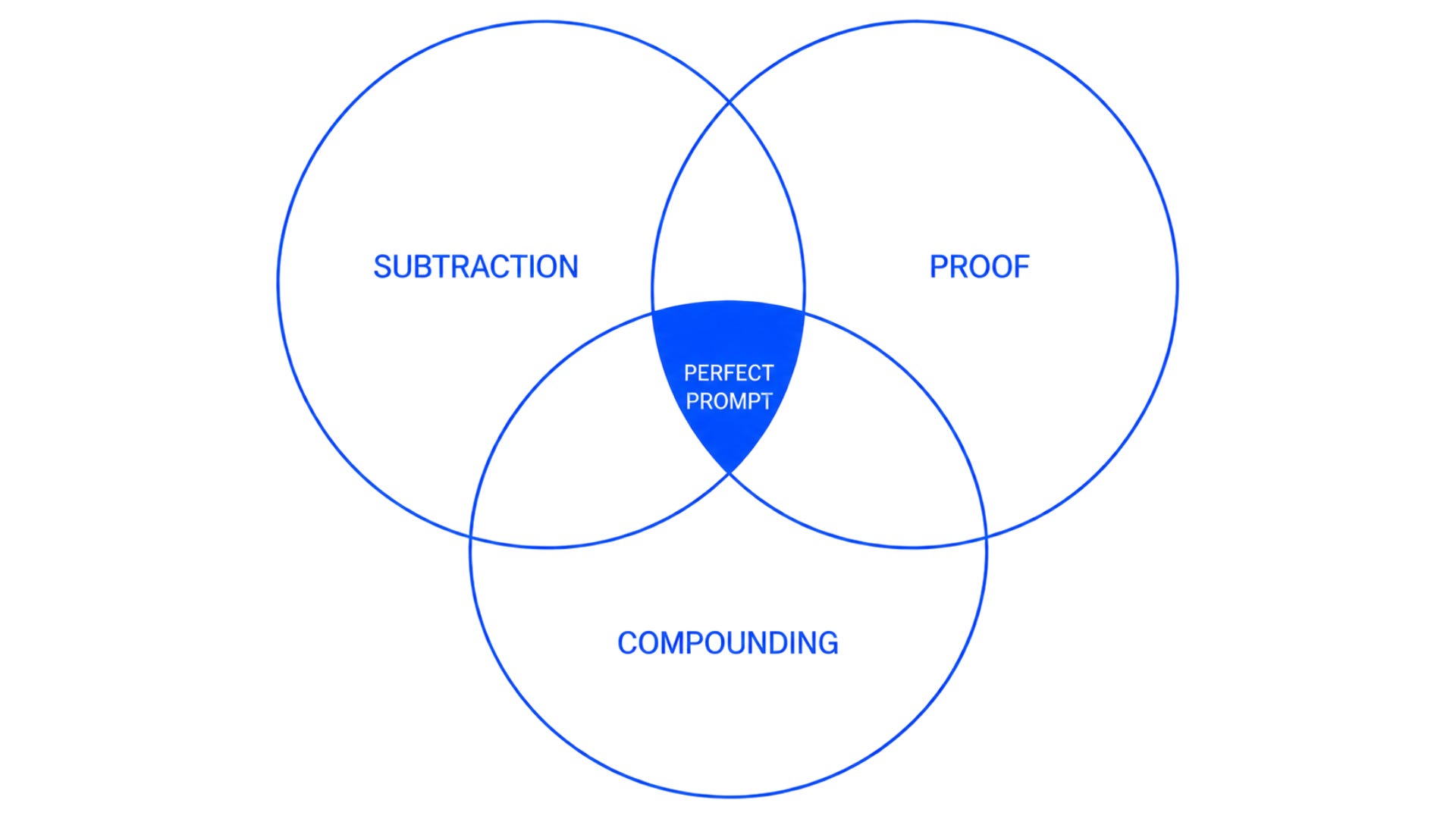
Backwards asks: what future would make this worth doing?
Inversion asks: how would this fail?
Subtraction asks: what can we remove without losing the soul?
Compounding asks: what gets stronger every time we repeat it?
Proof asks: what evidence would make this undeniable?
Most people ask AI for an output.
Better users ask AI for a lens.
A prompt says, “Write me the answer.”
A lens says, “Show me what I am not seeing.”
The prompt is downstream of the lens.
That is why prompt libraries feel useful for about twelve minutes. They give you words to paste, but they do not give you better perception.
And perception is the scarce thing now.
The ability to see what matters before the machine multiplies what does not.
Steal This Prompt
Use this before you ask AI to improve anything that matters.
Do not rewrite yet.

First, identify the lens I am using.

Then define what "sharper" should mean for this piece based on:
1. The audience
2. The emotional job
3. The business goal
4. The point of view
5. The standard the work must meet

Then give me five possible definitions of sharper:
- More specific
- More emotionally honest
- More commercially direct
- More contrarian
- More useful to the reader

For each definition, explain what would change.

Then recommend the best sharpening strategy.

Challenge my original thinking before helping me create the output.

Only rewrite after the standard is clear.
That prompt works because it makes you guide the machine before the machine starts generating.
It puts your taste back in the driver’s seat.
Drive Or Be Driven
The old divide was access.
Who had the software. Who had the team. Who had the budget. Who had the technical skill.
That divide is shrinking. And the new divide is posture.
One person uses AI to avoid thinking. Another uses AI to think better.
One person uses AI to finish. Another uses AI to understand.
One person uses AI to sound smart. Another uses AI to become harder to copy.
Same tool. Different human. Different future.
The risk is not that machines think.
The risk is that we stop noticing when we are not.
AI should make you more spiky, not flatter. It should make your taste sharper, your questions better, your standards clearer, your thinking more alive.
It should help you find the sentence only you would write, the offer only you could make, the strategy that comes from your lived experience, not the internet’s average opinion in a nicer jacket.
The machine can make words. Code. Images. Options. Plans. Summaries. Strategies.
But it can’t decide what’s worth becoming.
Drive the machine, or the machine will drive you toward the middle where dull and dumber lives.