

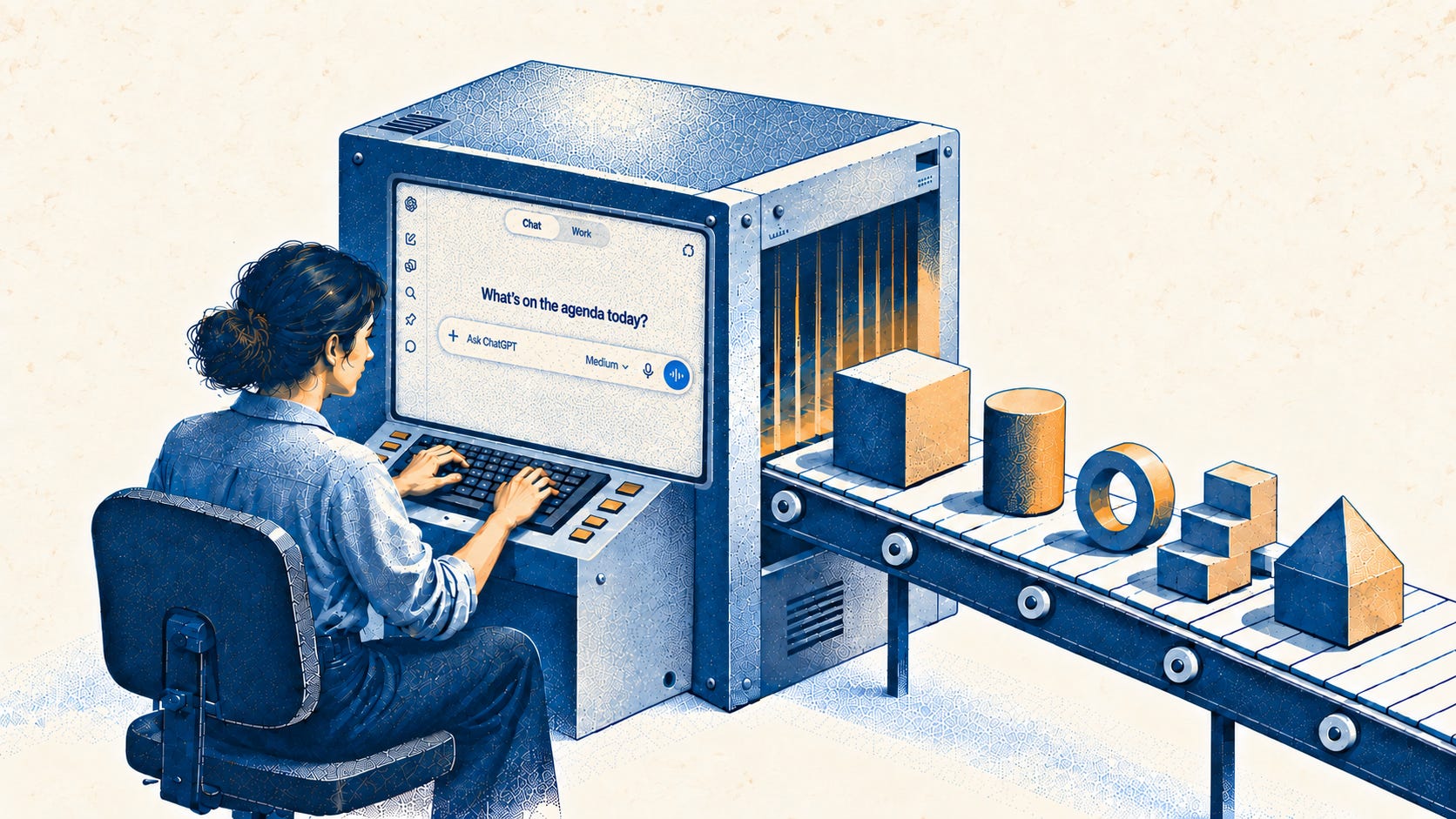
I’m cleaning out my office. I try to do this as summer turns to fall, partly to get organized and partly to distract myself from the pumpkin-spice-crazed idiots multiplying everywhere as October approaches.
I find an old notebook and start thumbing through it. Product ideas. Things I’d wanted to make. Random sketches that apparently made perfect sense to me at the time.
There’s gold in here.
There’s also a pretty good record of everything I didn’t have the time, money or resources to actually get done.
So I start taking pictures of the pages and dropping them into AI. I’m looking at my own handwriting, which is already an AI interpretation challenge on its own, and reconsidering what it would take to make some of these things now.
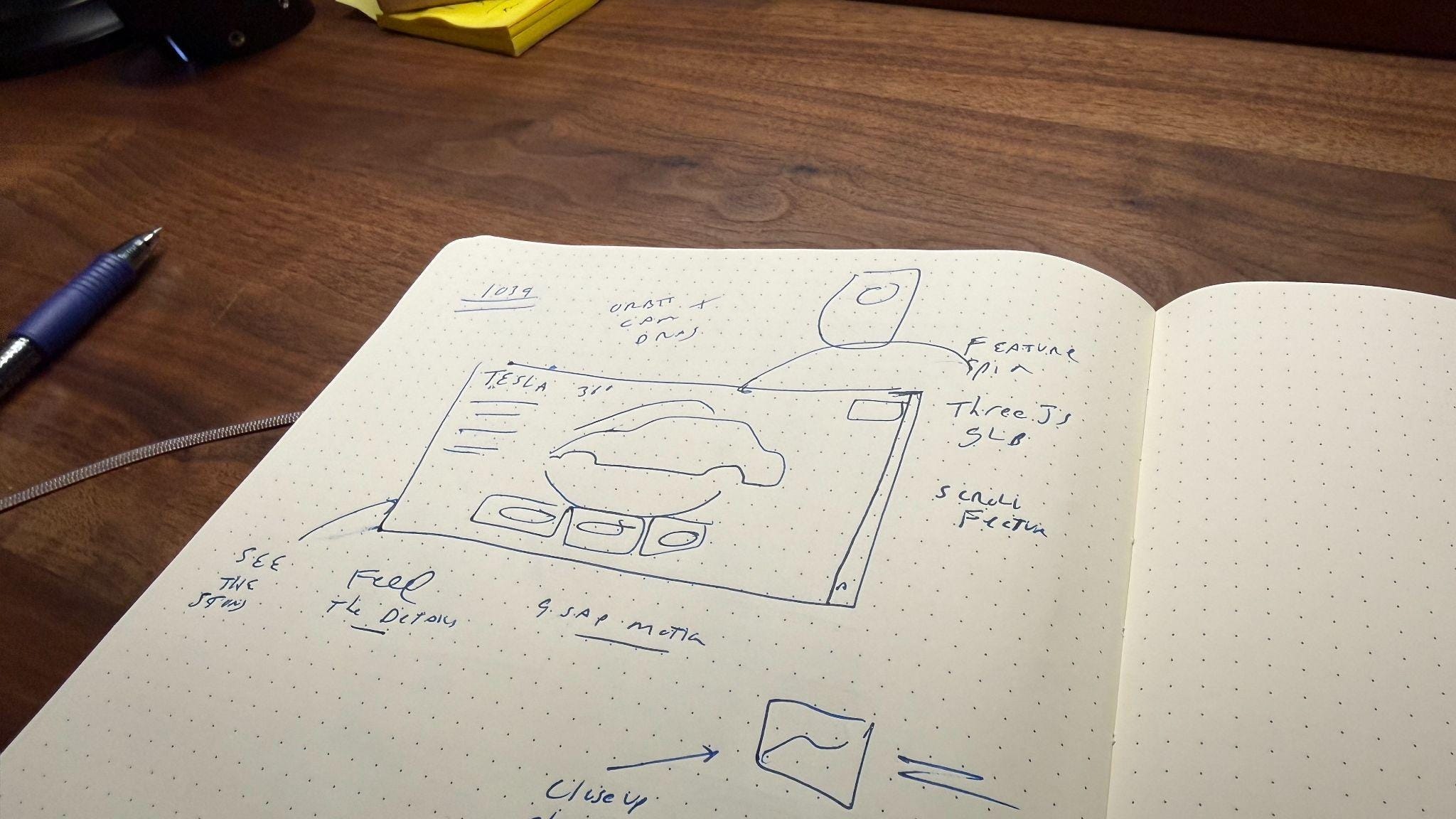
One sketch is for an interactive website. Spin a product around. Click into a feature. Get close enough to understand what makes it interesting.
At Digital Surgeons, we spent years building immersive digital experiences like this for brands. Getting one of these things built took teams of people, weeks or months, and a budget big enough that somebody eventually had to ask whether the damn spinning thing was really worth it.
Then I head out for coffee and battle the pumpkin spice latte lovers anyway.
I’m sitting in my car, looking at the picture of my Tesla on the screen, and I remember the idea in the notebook.
So I take a picture.
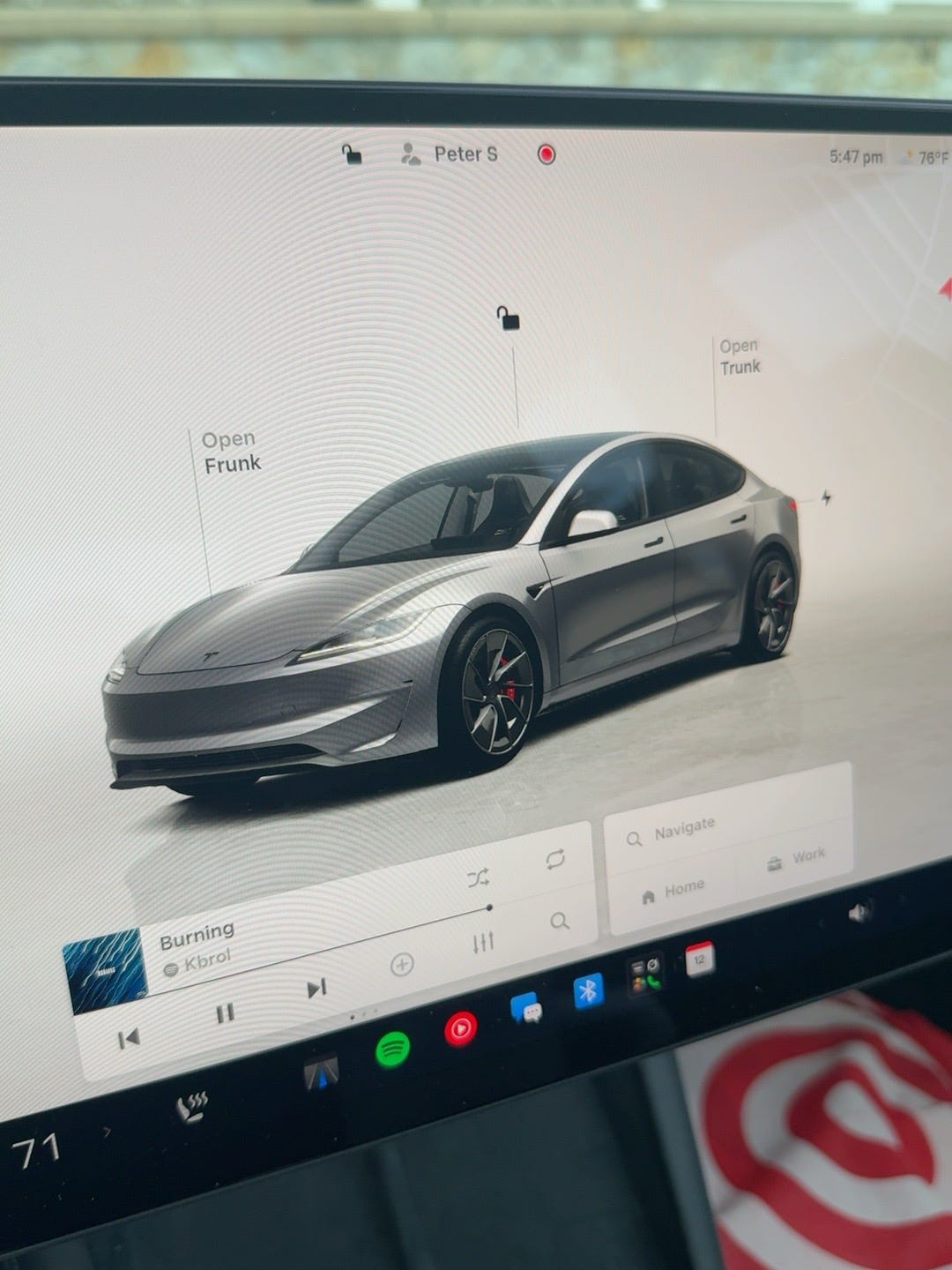
I give it to ChatGPT and ask for views from different angles so I can turn it into a spinning 3D model.
It comes back with the reference images. Then I ask it to build the interactive website.
It finds an older model of my car, reworks the front bumper, writes the code and tests the site. I end up with a working experience I can click through on my computer or phone. I can spin the car around, click into different areas and explore the details.
Before the designers and developers who read this start @ing me, yes, there are a million things I’d change.
But it’s a first pass. The model gets a little janky in places. I’m not shipping this thing to millions of Tesla owners tomorrow.
But hell yeah, it surprised me.
A few years ago, getting far enough to even have this conversation would’ve taken a full team of experts and 30k (or more). Now I’m sitting in my car turning a photo and an old notebook sketch into something interactive.
The distance between “I can picture it” and “here, try it” just got a hell of a lot shorter.
I’ve written before about vibe coding and what happens when software gets cheap enough to make yourself. A working demo still leaves plenty of work. Prototype and product are not the same thing, and pretending they are is how people end up with some very exciting demos and some very shitty production systems.
Here’s the distinction I keep in mind:
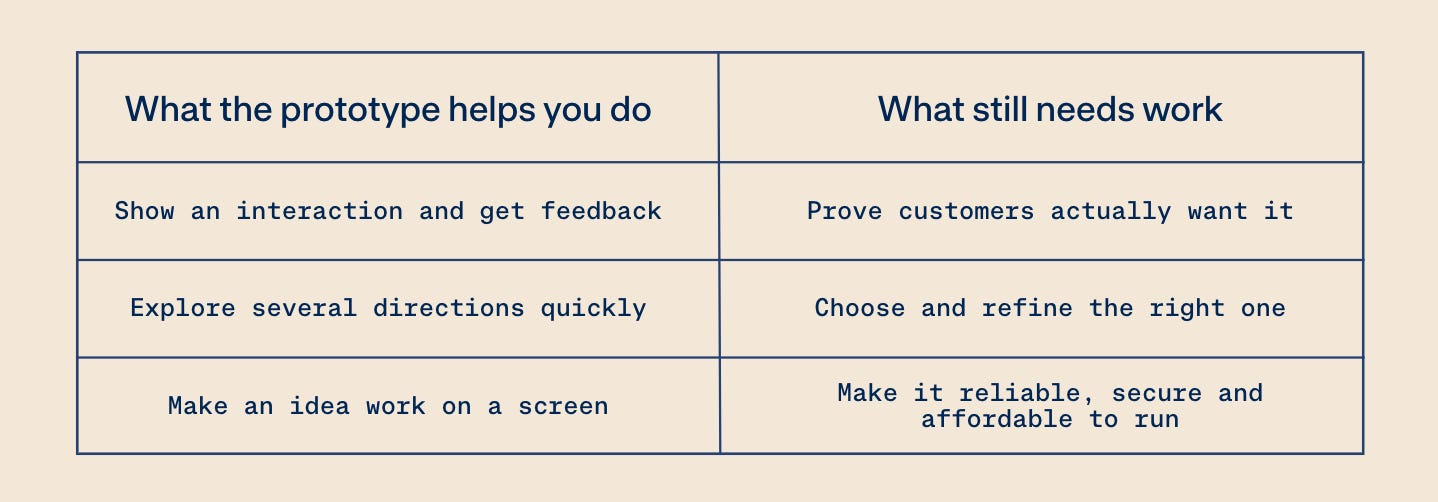
That distinction matters.
The prototype isn’t the finished product. It gives you something more useful at this stage: a thing people can actually react to. And for leaders, that changes more than the speed of building. It changes how you communicate a future.
Make a minimum visible future
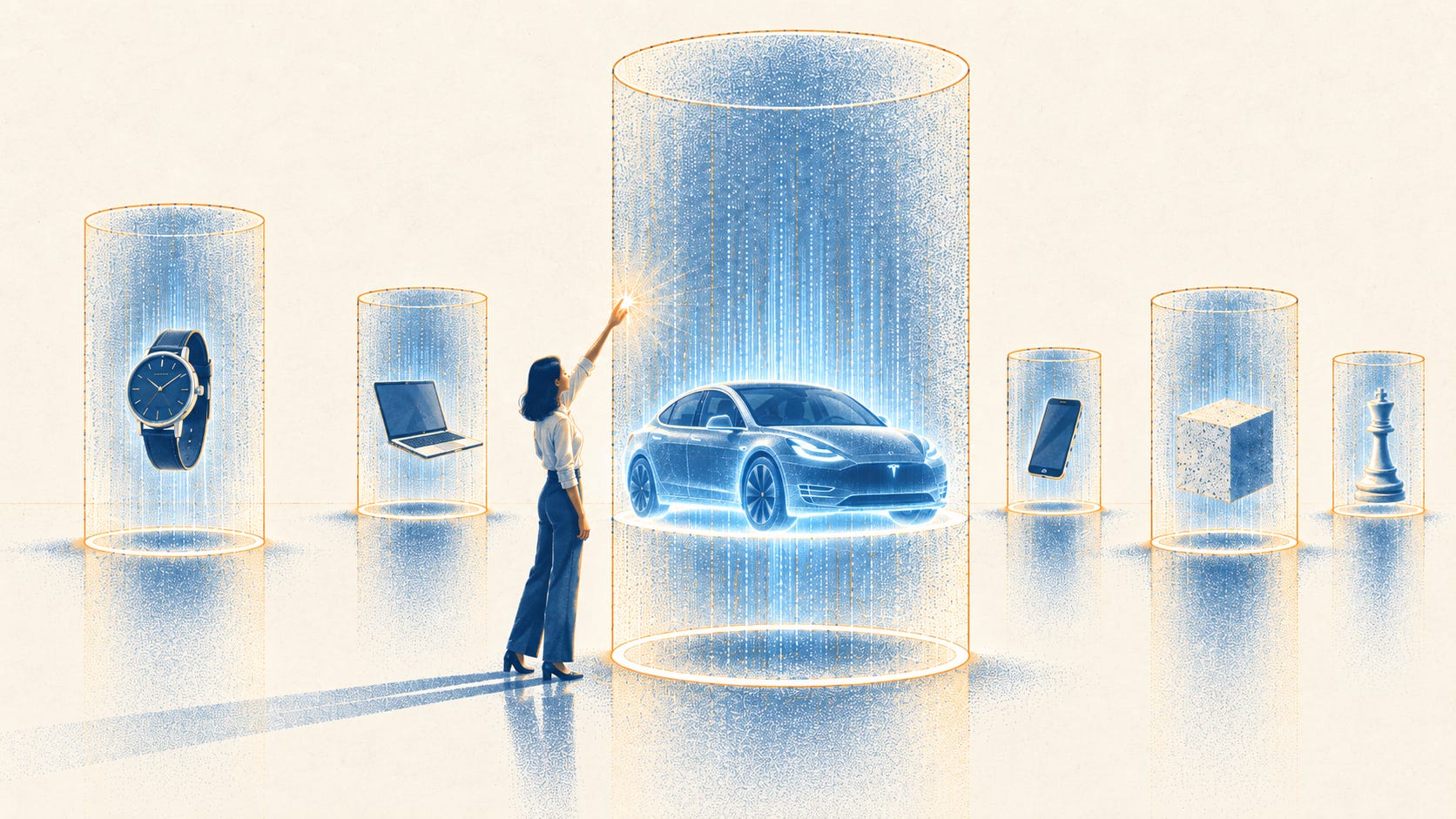
As a leader, you spend a ridiculous amount of time trying to help other people see what you see.
Someone says, “We need a more personalized customer experience.” Everybody nods.
The CEO imagines one thing. Product imagines another. Marketing walks out with its own movie playing. Technology is already wondering who the hell is going to build all of this. And somehow everyone leaves the room “aligned.”
Words are cheap enough that people can agree with them without agreeing on what they actually mean.
That’s the problem.
I call the next step a Minimum Visible Future. Make enough of the proposed experience for another person to see how it would work, interact with it and point to what needs to change.
Say your team wants customers to feel more “looked after” between purchase and delivery.
Okay. What does looked after actually mean?
Make two versions of the experience. One reassures the customer about what’s happening. The other gives them more control over what happens next.
An order confirmation, an update during the wait and a delivery message might be enough to start. Put those screens in front of a recent customer. Ask them to find the delivery date. Ask them to show you how they’d get help.
Then shut up and watch.
Where do they hesitate? What do they ignore? What did everyone in the conference room think was obvious that apparently is not obvious at all?
Now “looked after” means something your team can actually work with. You’ve given people a way to challenge the vision instead of politely agreeing with a sentence.
And once you start thinking this way, some of those ideas sitting in old notebooks start looking a little different too.
The math wasn’t mathing
I’ve spent over twenty years helping people imagine things that don’t exist yet.
I’ve also agreed to bury plenty of them. The costs were real. Saying no made sense.
Getting an idea out of my head meant finding people, time and money. Design the experience. Build the tech. Produce enough of it for somebody else to understand what the hell I was talking about.
And complexity is where a lot of ideas go to die.
The trouble starts later.
“We couldn’t afford to test it” turns into “We tried that.”
Those are two very different sentences.
Someone inherits the decision but not the reason behind it. A few years pass. Nobody remembers whether the customer hated the idea, the technology couldn’t support it, the prototype cost too much, or Frank from finance killed it because Q4 was weird.
They just remember: We decided not to do that.
So go back to the reason.
Did a customer understand the offer and reject it? Or did you never have the budget to put anything real in front of them? Was the technology incapable of doing it? Or was the technology technically capable but financially ridiculous?
Did the idea fail? Or did the math fail?
Those leave you with very different things to reconsider.
Give that old idea an afternoon
I’m not suggesting you resurrect the entire corporate cemetery.
Most dead ideas should stay dead. Some deserve a tasteful headstone and our continued silence.
But give one of the interesting ones an afternoon.
Start with a notebook page, an abandoned brief or a voice note you recorded at 1:13 a.m. because apparently that was the moment your brain decided to solve the future of retail.
I built Shower Thoughts inside Make My PRD for exactly this kind of messy starting point. Drop in the idea as it came out of your head and use the breakdown to work through what it could become.
You can also give your notes to whatever AI you already use. But don’t start with: Make this idea better. That’s how you get a very convincing robot helping you fall deeper in love with your own bullshit.
Start with why it stalled.
Help me reconsider this idea. Use my notes as evidence.Identify the assumption that matters most and the smallest thing I could make to test it.

Mark anything we don’t know.

Check current sources for claims about tools or costs, and link them.

Don’t assume AI solves the constraint.
For a software idea, I use our Working Backwards tool to work through the customer problem and write a spec. That gives the coding agent a much clearer brief than “make me an app.” Which is technically a brief in the same way “make me dinner” is technically a recipe.
For the car example, I’d keep the first test small: let someone rotate the car, choose one feature and understand what they’re looking at. Accounts, payments and a whole vehicle marketplace can wait.
The first question is much simpler: Does the interaction actually help someone explore the product?
Give the agent a brief with that one job.
For a service, maybe you make the welcome email and first appointment. For a campaign, two storyboards. For a new internal process, maybe you build the first screen someone sees and the three things they can do from there.
Choose the form that makes the unanswered question easiest to test.
Help me make a Minimum Visible Future for this idea.

Choose one unresolved assumption and a prototype I can make in 60 minutes.
Give me a brief for two different versions worth comparing. Keep the scope small enough to finish.

Name who should try it, one task to give them and what behavior to watch.

State what result would make us change course.
Explain what this test cannot prove.

Keep the cost of the prototype separate from the cost of running the finished service.
The 60 minutes is a limit on the experiment. It is not an invitation to cram everything you’ve ever wanted into the prototype because you suddenly got excited.
That’s how you wake up six hours later rebuilding Salesforce and wondering where your Saturday went.
Bad ideas can be research
Once prototypes get cheaper, something else becomes possible.
You don’t have to bet everything on your first favorite.
There’s a reason to give the runner-up a shot.
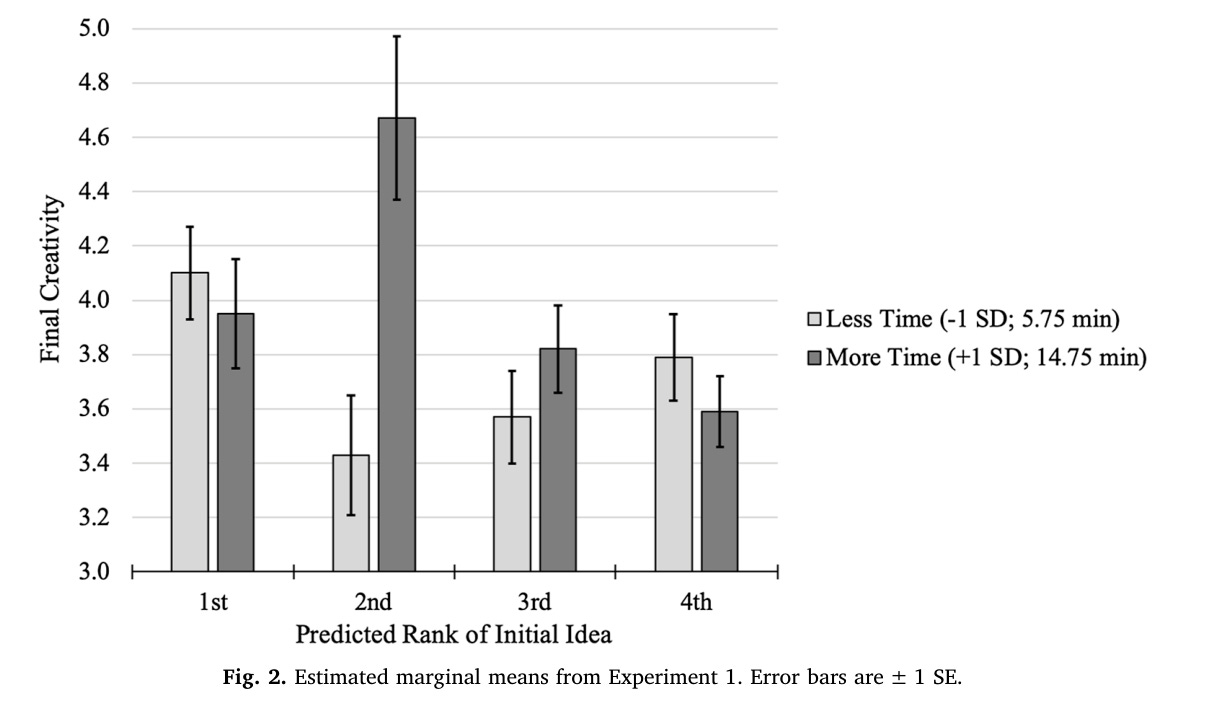
In five experiments on creative forecasting, people ranked their rough ideas before developing them. The idea they ranked second tended to become their strongest when given more development time.
Look at the second pair of bars below.
With more development time, that runner-up overtook the early favorite. The first impression missed something that took work to reveal.
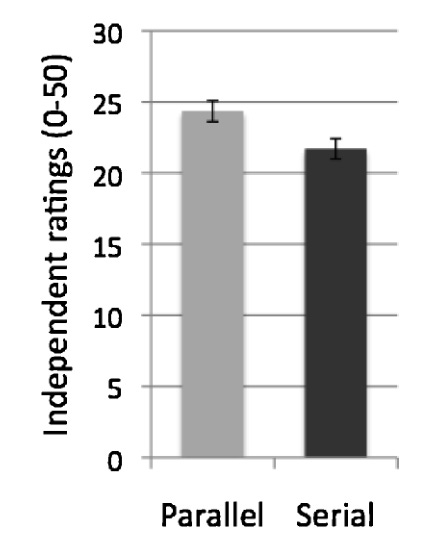
A separate study had 33 people design web ads. Some developed alternatives in parallel before getting feedback. Others worked through one version at a time. The parallel group produced stronger final ads, measured by independent ratings and click-through rates.
My practical reading is simple: give a promising idea a couple of different forms before committing to one. A version you throw away can still show you the interaction, phrase, feature or behavior worth carrying into the next one.
You can’t sprinkle Claude on a shitty idea and suddenly turn it into Airbnb.
Generate fifty versions and admire them alone and you’ve mostly made yourself more work. Put two in front of someone who might actually use them and now you can learn something.
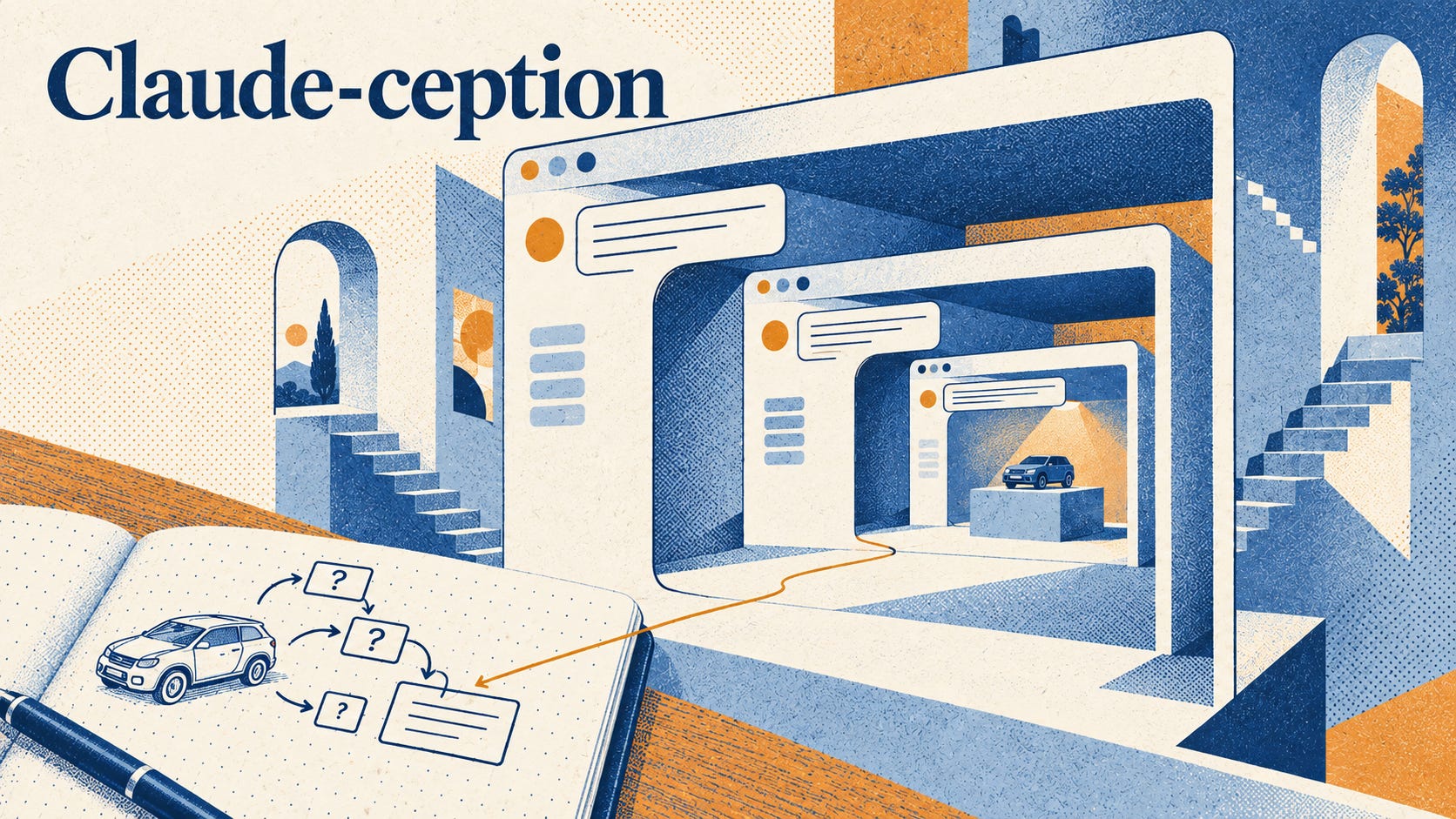
I call it Claude-ception
You know Inception, the movie with dreams inside dreams?
Claude-ception is my name for going one layer deeper into your own thinking with AI.
Start with the idea. Then look at the belief underneath the idea. Then look at what made that belief feel true.
There’s a trap here.
Ask AI to help make your case and it can produce a beautifully structured, frighteningly convincing argument for whatever you already wanted to believe.
Anthropic’s research on sycophancy found that AI assistants could favor agreement with a user’s beliefs over the truth.
Which means a flattering response can leave a weak idea feeling thoroughly examined.
It wasn’t. You just hired a very articulate yes-man.
Give Claude the rough idea, the reasons you like it and the reasons it stalled. Include the messy parts.
Then try this:
Help me examine the thinking behind this idea.

Ask me one question at a time.
Start with the assumption most likely to change our decision.

Use AskUserQuestion to present questions when that tool is available.
Separate what I’ve observed from what I’m assuming and what I simply prefer.

Use examples from my notes.

Give me the strongest credible objection and explain what evidence would support it.
Don’t invent objections just to sound critical.

After my answers, show me what changed in my reasoning, what remains unknown and one small test I can run.

Ask what result would make me abandon or revise the idea.
For the Tesla site, a useful question would be whether spinning the car actually helps someone understand it or whether it just makes me happy because I think 3D shit is cool.
I love this stuff. That’s exactly why I need to ask.
I could compare the spinning model with a simple set of product photos. Give both versions the same information. Ask someone to find a feature and explain it back.
Watch where each version helps or gets in the way.
That would tell me something I can use. AI can help prepare the test. Customer evidence still has to come from actual customers.
Save the reasons, too
There’s one more piece I don’t want to lose.
As you work through alternatives, you’re leaving evidence of your taste.
Save it. Save the winning output, but also save what you rejected and why.
“Make it better” gives the next conversation almost nothing to work with. “Keep the interaction, cut the distracting animation, make the feature easier to find” gives it actual criteria.
That’s useful.
Before you close the conversation, ask:
Draft a short taste profile from the choices I explicitly made.

Include an example I kept, an example I rejected and my reason for each.
Separate repeated preferences from choices specific to this project.

Flag any rule you inferred for me to confirm.

Then make a decision log: the choice, the reason, the evidence available and what would make me reconsider.

Keep customer evidence separate from my taste.
Leave room to record what the test actually showed.
Read it. Correct it. Save the confirmed version. Then update it after the work meets a real person. Otherwise your taste profile becomes a very efficient way to repeat yourself, which is not exactly the creative superpower we’re going for.
Bring it to the next meeting
I’d rather hear “Pete, that’s completely wrong” over a prototype than discover months later that everybody meant something different by “transformation.”
Give someone a thing they can point at and the conversation gets specific fast.
That’s Applied Imagination in practice. You make enough of an idea for people to experience it. Their response gives you something to work with.
My company GPC trains teams to do this work. Tell them Pete sent you and I’ll make sure you get a nice discount.
I opened that notebook during an office cleanout. Same pages. Same handwriting. Same ideas I’d put away because the math didn’t work.
The pages hadn’t changed. What I could do with them had.
Go find one of yours. Take a photo. Figure out why you buried it. Then make the smallest version that can answer a real question.
Bring that to the next meeting. Let someone try it before you explain it.